How to deal with failure?

Failing sucks because most of us are entitled overachievers. I know it’s tough love, but it is important to hear… Or read. Not only we were told we were special little snowflakes that could achieve anything we want to, we were also implicitly led to believe that the world and the job market owed us a chance.

I mean, we study hard, got good grades, learn languages… Now, it is the world’s turn! They owed us a chance! We want that magical job that was promised at the end of the rainbow, also known as college. With gold! And a dancing leprechaun! Okay… Maybe not that last part… Even though it would be awesome…

Reality is quite different and it could be terrifying. There are no special snowflakes. Nobody owes us anything. We all have to fight for the few opportunities around or create our own. In this “Hunger Games” type of scenario failure can help you grow and seize the opportunities your previously inflated ego would not allow you to see. Here is a perfect example: a lot of people would rather work for free in an internship than get a position as programme associate or community mobilizer because they feel those positions are beneath them.

Failing may be the best thing that has ever happen to you!

First of all, shit happens. It is not just a bumper sticker. Learning to adjust to things not always going your way is actually a marketable skill. Plus, that’s just how life goes. You won’t get everything you want whenever you want it. Learning how to make the best out of an unfortunate situation is definitely going to be useful both professionally and personally.

There is also a lot to be said about having a time for being creative and expanding the possibilities of what you can do. I’ve seen a lot of times the quote: “When people succeed, they tend to party, but when people fail, they tend to ponder”. It means that in this time, you can really open yourself up for possibilities. This could be the most creative time of your life. Embrace it!

Unemployment is definitely not fun and I’m not saying you should do nothing with the rest of your life. I’m saying that if you don’t take this moment as the possibility it is, all you will have is the feelings of disappointment without the motivation to do anything about it. So, essentially, you are just going to be sad for a while. Honestly, who want that?

All I’m asking is that if you are going to fail (which you will, like all of us), do it big and do it with purpose. Use it as a learning experience. Use it as a transformative experience. Make it meaningful and make it count! Pack up and go teach a foreign language in a country that you always wanted to know, while you try to be a development photographer. Open your NGO while you wait tables. Start a youth movement against sexual assault while temping. Just do your own revolution! Apply for fellowships, grants, be the leader you want to be, inspire, vlog, blog, volunteer… Bring your ideas to life. You don’t necessarily have to have your dream job to live a life with purpose. And you are allowed to be side tracked from time to time.

Time is so precious and it is something we take for granted when we are already working in this field. There are not going to be many more times in your life when you will have this opportunity to be this daring and free without many consequences. Enjoy it! You only get one life. Make those regrets about the mistakes you didn’t get a chance to make.

I’ll see you next week, until then,

Best of luck,

Natasha Leite @natashaleite /

Behind the looking glass: overcoming Racism and Xenophobia in Women's Rights claims

I’m a feminist. Well, that does not come as much of a surprise given the audience and the editorial lines of Shameless. But am I what could be labelled as an intersectional feminist? That means that I believe that gender is one of the power relations that permeates our societies, but we can not dissociate that dynamic from other power relations such as class, race/ethnicity, age and others. It makes discussions more complex, yes, as well as more inclusive, and it enables us to reach more comprehensive answers. Like gender, our relationships work through spectrums and lenses that need to be understood in order to be deconstructed.

So, why am I talking of deconstruction and what seem to be pretty abstract concepts in order to discuss women’s rights? For once, I have noticed a very frightening trend of using women’s rights to justify racism, especially Islamophobia. We all agree (or we should) that women’s rights and all human rights violations should be denounced. However, when that argument is used not for guaranteeing Human Rights, but to violate other minorities’ right, we have to speak up about it.

Also, it very sad and somewhat ironic that this discourse comes at the same time that a woman was threatened with rape for doing a PSA against street harassment… Not to mention the 10 hours of harassment caught on tape. Women face that type of harassment everyday in most capitals around the world and yet, there is no outcry from those same sources. Where is the indignation to having your safety violated and being public objectified just by virtue of being a woman in a public space?

I worked in the Maldives for a while. It is a Muslim country and my first in-depth experience working with Muslim communities. I have come to realize that in the Maldives, in Malé, women and girls had a lot more freedoms than in other Muslim countries such as Saudi Arabia, while in the rural communities, they still are very far from places like Turkey. I could work there and relate to those issues that had in fact, very similar roots or consequences as the ones I had seen in Latin America or Africa because I was open to their experience, to their voices. I didn’t place gender-based violence as a Muslim issue… If that were true, 1 in 5 women wouldn’t be sexually assaulted in the United States.

We have to look for better answers. Gender-based violence happens because we allow it… As countries, as societies and as individuals. Every time we minimize a story about sexual assault, every time an institution re-victimizes victims of homophobia, every time a newspaper that calls domestic violence a “passion crime” - all those dynamics are part of gender-based violence and allow it to be perpetuated.

Most countries have participated in the International Conference of Population Development (ICPD). Those agreements were made 20 years ago on our Sexual and Reproductive Health rights (SRHR) and until this day, groups still talk about our SRHR as if they were up for discussion. The Convention on the Elimination of All Forms of Discrimination against Women was ratified in 1979 and now, 35 years later, conservative groups all over the world seem to be advocating for the restriction of women’s rights. We have to be critical of ISIS, undeniably, but it is very dangerous to apply that perspective to all Muslim community and not pause for self-reflection.

It starts by asking: does my country have rape or sexual violence laws? Do women have equal pay for equal work? Has my country ever had a female representative? How are women portrayed in mass media? Through those questions we can begin to be more aware of our own faults as a society and realize that patriarchy and power relations don’t need religion to be oppressive (even though that’s a strong mean) - they mostly need people who naturalize and perpetuate that violence.

Originally posted in Shameless Mag.

How to deal with job searching anxiety?

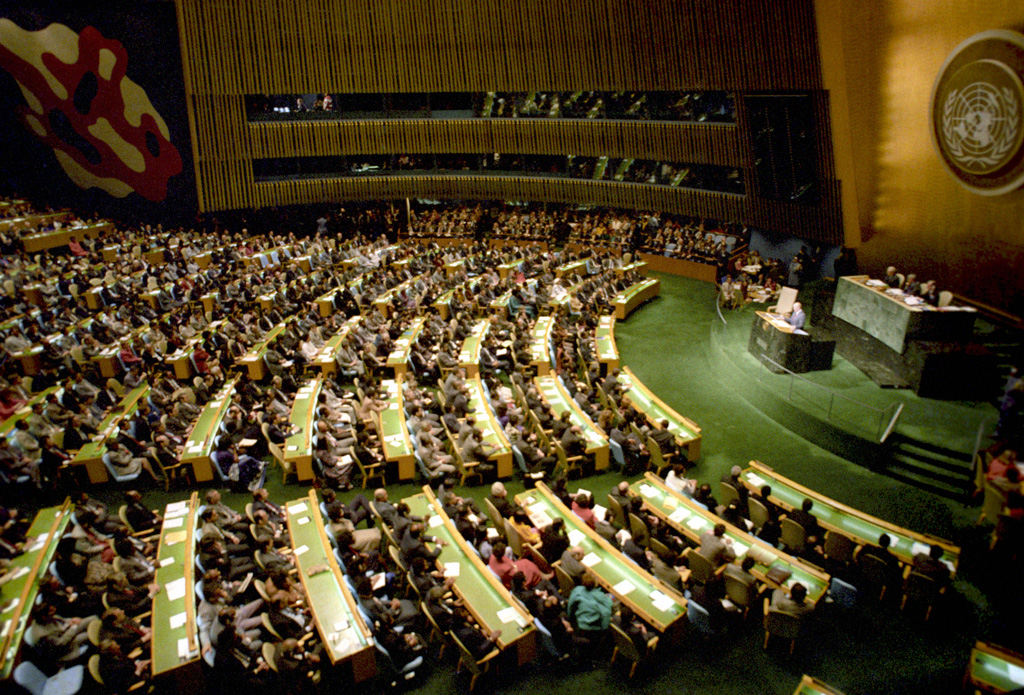
How to deal with job searching anxiety?

One of the issue most - just because I don’t want to say EVERY - job-seekers have is to deal with the recruitment process waiting game. It’s normal to be anxious and even upset by this process, because is essentially out of your control. There are a couple things you can do to make this process more manageable.

1) Understand the processes timings. If you have applied for a position in the United Nations - that’s not a consultancy - expect your process to take from 3 months to a year. Some of them, like the YPP and other international processes may take longer. That being said, if you are shortlisted, you are allowed to ask for the approximate time of the process and plan.

2) Don’t put all your hopes in one process. Even if there was a position that was perfect for you and you thought you were the perfect fit, there are many elements that are beyond our control: nepotism, perception, what aspect of that role the organisation is focussing on… So, until you get a definite yes and a letter, don’t put all your eggs in one basket and keep looking for jobs and projects.

3) Have projects. Projects are a great way to define what you like doing, take your skills to higher levels and keep your mind of the lack of job offers. Build an online portfolio, start a blog, vlog or a podcast, support a charity, start an online petition, run a marathon, engage with causes you like, learn a new language/improve on your languages or learn to cook… The possibilities are endless… Just don’t make this process the centre and focus of your life.

4) Draft a Game Plan. This is a tedious process. A game plan can make it fun (?)… Or at least bearable… Set your goal. Than the position you should be holding now in order to get there. Write what that position (now) would look like or at least the job title and look for it. Set goal like applying for 3 jobs every week from Actionaid, MSF and Oxfam. Or along those lines. Be realistic, but be specific.

5) Find a support group. A facebook group, an online forum, reddit or your friends who you can share details of your search. a) People can be generally supportive and give you tips or recommendations, b) some people are most likely in the same boat, so they can sympathise. But most importantly, this is a way to practice your networking skills and putting out there that you are looking for a job may be a good way to get some valuable information or referral.

6) Don’t major in minor things. Put this in perspective. This is not the worse that can happen to you. You have skills. You can survive doing many things. Not having an answer after 2 months is not the end of the world… When things get really really tough, ask yourself: what is the worst the could happen? And how would I deal with that? This is a good technique to understand your place at this moment and to realise that even if you don’t get an answer for your dream job in the next 24 hours, there is still plenty to do.

7) Be mindful. Some do yoga, some meditate, some run, some draw… Choose the venting method that works best for you. Give yourself a moment of peace and let your mind wander to different places. You have build up to much energy and only you can channel it in a productive way. Otherwise, it will keep building up and making you nervous, anxious, upset, stressed… I use the Mindfulness Daily app who helps keeping me on track, but now they are charging. You can find plenty of free material on youtube and just 5 minutes a day can help you become a little less anxious.

Well, this is it for this week! I’m still taking suggestions for this week, so if you have any, you can e-mail me at natasha@natashaleitedemoura.com or send your suggestions via Facebook or Twitter.

All the best,

Natasha Leite @natashaleite /

Newsletter #27 - How to be a development consultant

One thing that most people don’t know about the International Organisation system is that most people that work in these organisations work under the title of “consultant”. This is a common practice in order to hire more people under limited budgets and not having to deal with labour provisions. Consultants don’t have labour protection and are not entitled to vacation days, sick days, social security… But they also don’t necessarily need to pay taxes on their earnings.

There are usually three types of consultants:

  • Early career consultants: Early career consultants are entry-level staff in International Organisations that receive relatively low payment. Their contracts vary from 3 to 10 months, which can be renewed but not immediately. They fulfil the roles of regular staff, which is technically not allowed, but it is usually a good opportunity to get experience in those organisations, while still getting paid.

  • Mid-career consultants: Mid-career consultants usually have passed the 3 years of experience threshold and the USD 3000 a month fee. They are paid for specific products or consultancies or strategic functions within the team such as communications specialist, M&E specialist and others. Since they usually have more choice, consultancies have to have some opportunity cost to make it worth it: good payment, an amazing opportunity to expand on their portfolio, work-life balance and more flexibility to pursue other projects.

  • Senior consultants: Senior consultants, much like super models, are usually the individuals that don’t get out of bed for less than a significant amount of money. They have surpassed the 10 years of experience threshold and they are usually considered references in their areas.

Is it worth it for me?

If you are trying to get experience, be paid and you don’t want to wait for usually lengthy selection processes within those organisations, than yes, being a consultant maybe a great option for you. Especially if you don’t have many other underlining responsibilities such as children, mortgages, student debt… It is more sensible to take that sort of risk and invest that time to your career.

How do I do it?

Once again and I can’t stress this enough, look at the country or region to which you are applying to specifically. Entry-level job consultancies don’t usually show up at UNDP jobs because they are not Human Resources, they are usually considered Procurement. So… Instead of looking at UNDP Jobs, you should be looking at UNDP procurement. DevNetJobs and Devex often have more entry-level consultancy opportunities than ReliefWeb or Inspira.

Entry-level opportunities are usually the same as general job applications. For UN processes, that usually means a signed P11 and a cover letter. For other International Organisations there are usually specific templates, online application processes or your plain and old CV would do.

Next week, we are going to talk about how to handle the anxiety of waiting for job responses.

Until then,

Best of luck in your search!

Natasha Leite @natashaleite /

Study Plan for the YPP exam 2014 - Human Rights Job Family

YPP 2014 – Human Rights Job Family

Study Plan: Week 1- Specifics of Human Rights (ending November 16)

III. State’s Human Rights Obligations.

  1. Legally bounding states to Human Rights by International law Consent ii. Customary international law

iii. Internalisation of human rights norms.

  1. Three Part Framework i. Respect ii. Protect iii. Fulfil
  2. Civil and political rights.
  3. Sources of Civil and political Rights i. International Covenant on Civil and Political Rights. ii. The Core UN human rights treaties iii. Genocide convention iv. Geneva conventions (I, II,II,IV, as well as protocols I and II) v. International convention for the protection of all persons from enforced disappearance. vi. Jus cogens and International customs.
  4. Specific Civil and political rights. i. Characteristics of all Civil and Political Rights ii. Self-determination of peoples iii. Prohibition of any type of discrimination iv. Rights for Life, Liberty and physical security v. Judicial process vi. Fundamental freedoms vii. Family viii. Political Participation ix. Minorities. x. Death penalty V. Economic, cultural and social rights.
  5. Sources of Economic, Cultural and Social Rights i. International Covenant on Economic, Cultural and Social Rights ii. UN core Human Rights Treaties iii. Declaration on the Rights of Indigenous peoples
  6. Specific Economic, cultural and social rights i. Work ii. Social security and Social protection iii. Protection and assistance to the family iv. Adequate standard of living v. Health vi. Education vii. Cultural Life VI. Collective Rights
  7. Theoretical Perspectives
  8. The right to self-determination
  9. The right to development
  10. The right to a healthy environment
  11. The right to Peace

VII. Human Rights of Vulnerable persons and groups

  1. Theoretical perspectives
  2. Women’s rights
  3. Children’s rights
  4. Rights of the Person with disabilities
  5. Rights of ethnic, religious and linguistic minorities
  6. Indigenous people’s rights
  7. Protection of refugees.
  8. LGBT Rights

Related questions:

  • List the seven principal (UN) international human rights treaties currently in force.
  • Describe the “Global Compact” and discuss its importance for human rights

Materials

  • A Handbook of International Human Rights Terminology . By H. Victor Condé, University of Nebraska Press.

  • Human Rights: A Compilation of International Instruments. UN/DPI. / Droits de l’homme : recueil des instruments internationaux. ONU/DPI.

  • Integrating Human Rights with Sustainable Human Development. UN, 1998. / Intégrer les droits de l’homme au développement durable.1998.

  • The United Nations and Human Rights, 1945-1995. UN/DPI, 1995 / Les Nations Unies et les droits de l’homme, 1945-1995. Série

  • “Livres bleus des Nations Unies”, Volume VIII. ONU /DPI. 1996. 536 pages.

  • United Nations Action in the Field of Human Rights. UN / Les activités de l’ONU dans le domaine des droits de l’homme. ONU.

  • World Conference on Human Rights: The Vienna Declaration and Programme of Action. DPI, New York, 1995

Week 2 Human Rights enforcement mechanism and human rights and armed conflict (ending November 23)

VIII. The UN System

  1. The Need for International enforcement mechanisms
  2. Charter Bodies i. The Economic and Social Council – ECOSOC
    1. The Commission on the Status of Women
  3. The Permanent Forum on Indigenous Issues
  4. Consultative status of NGOs in the UN ii. The UN Security Council iii. The UN Secretariat iv. The Office of the High Commissioner of Human Rights
  5. Human Rights Coordination
  6. Human Rights Monitoring
  7. Human Rights Studies
  8. Human Rights promotion v. The General Assembly vi. The Human Rights Council
  9. Universal periodic review
  10. Advisory Body
  11. Special procedure
  12. Complaints procedures
  13. Treaty Bodies i. Functions of the treaty bodies
  14. Issuing general comments
  15. Considering state parties’ reports
  16. Conducting inquiries
  17. Receiving individual communications
  18. Receiving state-to-state complaints
  19. Human Rights Committee

iii. Committee on Economic, social and cultural rights

  1. Committee on the elimination of discrimination against women
  2. Committee on the elimination of racial discrimination vi. Committee against torture vii. Committee on the rights of child viii. Committee on migrant workers ix. Committee on the rights of persons with disabilities x. Committee on enforced disappearance IX. Human Rights during armed conflicts
  3. Jus ad Bellum and the responsibility to protect
  4. International humanitarian law
  5. Law and war
  6. International criminal law

Related questions:

  • Describe the role and mandate of the United Nations High Commissioner for Human Rights.
  • Recent years have brought important developments in strengthening the judicial enforcement of international human rights and humanitarian law. Name three (3) such developments since the 1990s.
  • One aspect of the Secretary General’s Reform programme of 1997 called for integrating the human rights programmes into a broad range of the organisation’s activities, including in the peacekeeping, development and humanitarian areas. Discuss the objectives of this process and provide three examples of how it is being accomplished

Week 3: Human Rights in peacekeeping operations and Human Rights Monitoring (ending November 30)

  1. Human Rights in Peacekeeping Operations
  2. Human rights problems in conflict and post-conflict i. How violations of human rights occur? ii. Human rights problems common in peacekeeping operations iii. Groups especially at risk iv. Transitional justice v. Reinforcement of state authorities and civil society
  3. Key Principles of conduct of human rights in Peacekeeping missions.
  4. Actions of protection i. Definition and operational framework ii. Protection of civilians iii. Protection through presence and access iv. Building protection strategies v. Applying human rights in peace operations vi. The work of human rights components in peacekeeping operations
  5. DPKO missions specific human rights mandates.
  6. Human rights monitoring
  7. Concept
  8. Human Rights violations vs Human Rights abuse
  9. Bringing state authorities responsible for their human rights role
  10. Monitoring Political and civil rights
  11. Monitoring economic and cultural rights
  12. Structure of a human rights report i. Key information ii. Key indicators iii. Gender mainstreaming
  13. Protection of victims and witnesses. i. Voluntary fund on the protection of victims of torture.

Week 4: the week of the exam (ending 3 December)

XII. Summarize key texts relevant to human rights. XIII. Review

Originally posted at YPUN.

Newsletter #25: Here’s Johnny!

Hey everyone, I know it´s been too long. I move to a new country and had to deal with all the issues that entails, such as finding an apartment, finding decent Internet providers (even though they took two weeks to install our cable) and settling in in general.

I’m alive and well! And now, I’m settled enough to be able to restart the posts of the newsletter and keep on with my love projects such as this! I’m starting to write to Shameless magazine and trying to keep up with all my other writing assignments and general blogs and publications.

On a note to everyone writing about one-on-one consultancies, those I really won’t be able to start back by the end of this year. I’m really sorry, but I can’t really commit to any more projects.

A day in the life…

So, this will be a different newsletter because I will be guiding through my first hand experience with the YPP programme. I have applied and I was selected. I have talked a lot of the YPP programme in my posts and this is truly my first experience with it. Plus, I only know one other person who has been through this stage of the test. Essentially, I will be with you through the stages of the process, at least, so far and how am I preparing for the next steps.

Application process:

I applied to the YPP in June this year… And receive the confirmation letter this week. So for all of you who are just getting acquainted with United Nations processes times… It does takes ridiculously long. Don’t get discouraged.

The next step is the written examination, which will take place in December. I’m taking a look at the studying materials, but being perfectly honest with you guys, I REALLY won’t have the time to study for this, so I will share my very restrictive study plan/study materials.

I’m doing the test for Human Rights, so there is a lot of legal background on how UN treaties and covenants are internalised by countries and the legal Human Rights framework created by the UN and other international bodies.

I will have to say, Facebook groups dedicated to studying for the test have been helpful, even if it is pointing out in the general direction of where you can find the most appropriate information. Also, the UN page on the YPP has tons of materials on the process, except for the Human Rights group… That’s a little short on the materials.

After the exam, there is the examination with the competency-based interview. It will be really interesting to report to you a little bit more information on this process that for me is also very new.

Also, I have to tell you, I hold NO expectations to the YPP process whatsoever. Not because of a credibility issue, just for the fact that by the time there is an answer, you still can be put on the roster and it can take two years before you are “drafted”… So, I wouldn’t put all my hopes into this one process.

This is the first week and the first week back, it may be more general information, but I did want to tell you more of what will be coming next… Next edition would be about being an experimental digital nomad. Hope you enjoy!

Until then,

Good luck in your search!

Natasha

Especial – Dez Razões Para Morar no…”Peru”

Morar no Peru e em outros países da América Latina nos mostra um pouco o quão a imagem que se cria no Brasil sobre esses países não faz jus aos avanços e a qualidade de vida que muitos desses países podem oferecer. Já que me deram essa oportunidade eu devo fazer minha mea culpa e dizer que essas são as minhas 10 razões… Mas você pode escolher muitas outras. Desde não gostar de chuva a ser fã de escaladas… O que não posso dizer que seja meu caso.

1) É um país lindo com uma mistura incrivelmente interessante do novo, com a antiga cultura Inca e pré-Inca. Eu achei emocionante o quanto as diversas culturas nativas do Peru não só são respeitadas e preservadas como elas são enaltecidas. Também me causa tristeza porque me levou a fazer vários questionamentos sobre como a nossa história pré-colonial é completamente esquecida.

2) A comida é maravilhosa. Hoje em dia, o Peru também recebe o que é conhecido como “turismo gastronômico”, em grande parte por sua excelência culinária. Por exemplo, a única escola do Cordon Bleu na América do Sul está localizada em Lima. É muito difícil não comer bem em um restaurante peruano.

DSC01279_1

3) O custo de vida, em relação ao Brasil, é muito menor. Isso não só significa uma melhor qualidade de vida, mas também mostra como estamos pagando caro por pouco. Por 1600 reais se aluga um apartamento de dois quartos, em Miraflores (o bairro turístico de Lima), mobiliado e com todas as contas pagas.

DSC01208_1

4) Poder experimentar várias variedades de Pisco. Pisco é a bebida alcoólica típica do Peru. Feita da fermentação da uva como o vinho, mas com um processo diferente, o Pisco é uma bebida excelente para se fazer coquetéis, como o famoso “Pisco Sour”.

DSC01281_15) Se você gosta de belezas naturais e aventuras, o país tem para todos os gostos. Em pouco tempo você pode estar na floresta Amazônica em Iquitos ou ao lado dos Andes em Chinchero. Ver desde llamas e alpacas andando pelos campos a focas e baleias no Pacífico.

DSC01690_16) Parques. Aqui se tem acesso a parques e espaços públicos verdes onde todos podem desfrutar o pôr-do-sol de Lima… O que é absolutamente impressionante porque Lima é praticamente um deserto. Os parques não são “naturais”, são uma política consciente do Munícipio de tornar a vida melhor para os seus habitantes.

DSC01439_17) Segurança. Apesar dos problemas de segurança que passam a maioria das grandes cidades do mundo, em termos de América Latina, as cidades do Peru passam uma sensação de bastante segurança. É possível conhecer as cidades a pé… Com exceção de Lima em toda sua extensão. Pelo tamanho, mais do que qualquer outra coisa.

DSC01418_18) Espanhol não é tão difícil de aprender do português. E é o quarto idioma nativo mais falado no mundo. Se você ainda não fala espanhol, é uma excelente desculpa para aprender… Assim não vão se sentir tão perdidos andando pela cidade.

DSC01656_19) Clima. Os climas do Peru são completamente diferentes. O clima em Lima sempre vai ser previsível. E nunca chove. Em Cusco, em um só dia você passa pelas quatro estações.

DSC01313_110) As pessoas são abertas e bastante acolhedoras. Não é difícil chegar em um bar, café ou restaurante no Peru e sair com vários novos amigos.

11) Eu já falei que a comida é maravilhosa?

Publicado originalmente em Brasileiras pelo Mundo

(Film Review) Elysium: relevant story, but this is no District 9.

Rating: 6.8/10

The year is 2154; the poor live in the ruins of a destroyed Earth while the rich enjoy an idyllic existence in a man-made satellite. The medical pods of Elysium enable the rich to never get sick or old, while people on Earth struggle with crumbling medical services. If you think this is somehow related to healthcare and immigration reform in the United States… The movie will make those links for you. Over and over again.

Don’t get me wrong. This is not a bad movie. I appreciate the fact that Blomkamp is trying to mainstream these issues to people who may have not sat through an argument for immigration reform. Having said that, there is something about the overtness of this allegory that rubs me the wrong way. This seems almost heavy handed, compared to the subtlety of District 9. Most of the actors “from” Earth are played by Latin actors (Wagner Moura, Alice Braga, Diego Luna…) with the exception of Damon and they speak Spanish.

The movie looks nice (yes, I’m willing to let the shaking cam bits slide) and the grimy, dirty futuristic aspect of Earth is dramatically different from the cool and elegant Elysium. The acting is mostly good. Alice Braga tries to bring more to the table than just being “the girl” and Damon really fleshes out what could be a relatively narrow hero character arc. Jodie Foster brings gravitas to what could be a very caricatured role; however, her accent is bizarre and very distracting. In one or two scenes she can deliver perfect French while her default “English” sounds like a generic Germanic Bond-villain accent. Sharlto Copley is amazing and as creepy as the come as a South African mercenary.

Moreover, this is genuinely an enjoyable movie, but one that the more you think about it, the more you are able to poke holes in the plot. For instance, if people in Elysium never get old, are children able to grow up? In one scene, Jodie Foster is defending her zero tolerance actions on her mother instincts and trying to protect the place she build for her children and their children when they grow… Would that even be possible? If people are coming to Elysium just to use the pods, why not have a couple on Earth and don’t have to worry?

In the end, Elysium is enjoyable, but it had potential to be a much better movie. As movies go, it has far more depth than your average blockbuster sci-fi, but after movies like Inception or even District 9, just being a little better than the average doesn’t cut it anymore, especially for Blomkamp.

First posted in Post-Production Reviews. Link to the film’s IMDB page.

(Film review) Smashed (2012): a journey through sobriety and the complicate nature of addiction and relationships.

Rating 8.0/10

Director James Ponsoldt creates a realistic picture of addiction in Kate’s (Mary Elizabeth Winstead) tough journey through alcoholism and recovery. Drinking has become to rule her life and eventually takes her in to really dark places. In order to overcome alcoholism, she has to make some difficult choices and let parts of her life behind.

The movie looks grimy at same points, but so are the places that Kate finds herself. It does not give much away visually, only the contrast of her colourful and happy work place (as a first grade teacher) with her hard-core drinking nights out with her husband, Charlie (Aaron Paul, not dealing meth – yes, this was a Breaking Bad reference, deal with it!).

The plot was credible with Wistead and Paul feeling very much like real people. It was an interesting take on alcoholism because this film is more careful to show not only the self-destructive part of this process, but mostly how your social relations can be obstacles for recovery. Most of Kate’s life has been surrounded by heavy drinkers, which has definitely enabled her to keep “functional” or undiscovered for so long.

Wistead definitely has given one of her best performances yet and I can’t wait to see what she does next - hopefully, she will stop appearing on remakes of my favourite horror movies, just saying); she manages to keep Kate relatable even when she does some cringe worthy things. Kate’s highs and lows are really extreme, but it feels more of a writing device than an actual acting choice. Aaron Paul does troubled, sexy and grungy in his sleep. In this case, he plays well this partying husband who is trying to be supportive to his wife; yet doesn’t really get the depths of her addiction whilst seeing in her changing life style (especially in her commitment to the AA) a threat to their relationship. In no way does he come off as cruel or unloving, but he simply lacks the tools to help her.

The movie ending is very consistent with the characters’ story arc yet it is not patronising or obvious, which is always a plus. It’s an overall good movie with great performances. Director Ponsoldt has also recently released “Spectacular Now”, which has gotten him some pretty impressive reviews, so it appears he is trailing a very interesting career.

First posted in Post-Production Reviews. Link to the film’s IMDB page.