What is behind the current wave of online misogyny?

Article for Shameless Magazine

Illustration: Kelsey Borch

Disclaimer: In order not to foster hate speech or give these groups more publicity I will not name them in this article. However, that information is readily available and any internet search with the main themes in this article will lead you to their page or the main proponents of.

Some days it feels like the Internet is made of equal parts cat pictures and hate. Which is a shame, because I quite like cats. In many ways, technology has brought the wonderful gift of connection and support for people that needed a safe space. Groups like LGBTI teens that sometimes feel alone and isolated have found support and encouragement in stories of other teens that have gone through the same issues. Gender and sexual violence survivors have found solace and strength sharing their own stories without judgement or question of their loving peers. But, I’m not talking about those groups. Today, I’ve decided to write about the increase of communities of a different kind - hate groups.

For every wave of feminism and women’s rights achievement there is a very strong wave of backlash from those who feel threatened by change and wish to maintain the status quo. This is not necessary an intentional pattern for the individuals that engage in sexist or misogynistic groups, but they would generically identify their motive for engaging in such communities to feelings of disenfranchisement as if they were “losing their rightful place in the world”.

Usually, members of hate or neofascist groups have a hard time understanding how the promotion of equality and improvement of Human Rights for all does not necessarily mean the loss or removal of rights that they have. It’s about building a world where your gender; skin colour, sexual orientation and other innate characteristics would not be an obstacle for people achieving their highest potential. The caveat in our current online scenario is that we have young techy-savvy people who have embarked in this very reactionary journey without any self-awareness.

The majority of the members of these online groups are young white males, who mostly would also identify as libertarian and atheist and in general they seem comfortable with liberal terminology. They seem to think they are rational and evidence-oriented, when in fact, the sheer presence in those groups show that in many levels they operate solely under biases and bigotry.

There is plenty of evidence to such. In discussions, they would claim, “feminism is a sexual strategy”, which makes no sense and has no basis on gender literature. Or they would question, “what ever did feminists do to help men”, apart from the obvious answer that men already are privileged by the system and a more equitable society would benefit us all. Many feminists groups have worked to support LGBTI groups, support the construction of non-violent masculinities, as well as, the fight for men and women to perform the social roles that they are more inclined to play, not the roles they are pressured by society to perform (allowing men to be more nurturing, and women to take leadership roles, among others). But I digress - many followers of these doctrinarian groups would not think before repeating that women have only reached “success” through affirmative action or sexual favours, basically stating that only heterosexual white males are “worthy” of success, often subscribing to biological essentialism. Other examples of biological essentialism include saying that women reached their peak at 25 and there is no point dating any older, while men get increasingly better with age, which is often shown in graph format and it has no criteria or basis. So, nobody knows in what aspects men and women are being compared and where the source for comparison comes from. But then again, throughout history, hate groups have used pseudo-science* to justify completely bogus claims, so that does not come as a shock.

It is important to point out that, in practice, those groups have done little to nothing to advance human rights for men and their social protection. So far, all money they have raised in imitating and funnelling donations away from the White Ribbon anti-domestic-violence charity have not gone to male victims of violence. They have not started petitions and serious campaigns to increase paternity leave. They basically have spend their time and money criticizing feminism and trying to de-fund women’s rights charity appeals.

The way they operate is very effective in its format, much like cult groups, they prey on the vulnerable to inflate their self-worth and believe they are part of “something bigger”. Basically they target socially awkward and/or jilted boys and men and they peer pressure them in a routine of self-improvement and confidence, which tends to generate more success with the opposite sex (I say opposite sex, because even though the content of the discussions tend to be very homoerotic, the members of those groups identify almost exclusively as heterosexual). They teach them pick-up artistry tricks that borderline on abuse and coercion. Then, these communities - in an almost sociopath-like manner - teach these boys and men that women are worthless and disposable, thereby perpetuating hatred, legitimating violence, creating an entire generation of boys and men who would not be able to have any type of meaningful relationship with women.

In order to counteract those harmful influences and movement is part of the responsibility of feminist organisations and women’s rights movements that work specially with young girls to warn them to protect themselves from emotional abuse, empower them to feel worthy and to walk away at any sign of nagging (putting girls down, so they would want to show their worth). We have to strive to support women and girls to believe in themselves and what they are able to achieve regardless of all these movements determined to bring them down.

Even though my interest in studying those groups may have arisen from my concern about the well-being of girls and supporting feminist discourse online without being afraid of doxing or censorship, I can’t help but feel sorry for some of these boys. In many ways, they are told that what they are isn’t good enough. They have to change themselves, be aggressive and stop caring about other people’s feelings. They don’t realise that women are not so one-dimensional, that being caring and respectful is very valuable and loving relationships requite mutual respect and trust.

** Scientific racism is the use of scientific techniques and hypotheses to sanction the belief in racial superiority, inferiority or racism. This is not the same as using scientific findings and the scientific method to investigate differences among races. These pseudoscientific interpretations were at the core of Nazi and Fascist ideologies of racial superiority as well as the justification for colonisation. Examples of these “theories” can be better explained in: Racism in the Service of Fascism, Empire-Building and War; Scientific Racism: Persistence and Change; and The legacy of Malthus: the social costs of the new scientific racism.*

Entry-level advice

b471bb79-c204-4b09-9284-1f1bf750337c

You are looking for you first job or first “real” job experience. You are excited and a little bit scared…. But mostly excited! You are going to go out and be amazing and everything is going to perfect and you are going to demonstrate leadership and all of your dreams will come true… Even though, I really hope that will happen, this is how you can maximize that experience and prepare yourself to the challenges ahead.

So here are my tips:

Make mistakes. This is your moment to try, experiment, ask questions, and make mistakes. You don’t need to strive for perfection, but strive to learn the most, be enthusiastically engaged with the topics and the skills you like the most. Do try to do a little bit of everything; you never know what can inspire you.

… But also try to challenge yourself. Trying to stand out and do a good job. Leave your mark.

Starting with simple activities is not shameful. Many entry-level workers, especially after graduation, feel quite annoyed if given basic activities such as making copies, translating, making newsletters. There is no too basic task if you are just starting. I understand that for many there is the fear to be attached to those tasks, but here is where the next tip comes in…

Be explicit about your intentions. This is not just about work, but life as well… Be clear to where you want to reach. Offer to work in projects that you are interested, give your perspective if you are interested in a specific subject.

Get to know, listen and learn from your co-workers. Networking is important, but more than that your first co-workers can teach you a lot. Not only of what to do, but also what not to do. Take the time to learn those lessons. Modelling is a very effective way of moving forward in your career and listening is good advice in general. Find your mentors, the people that can be your resource. Also, on a leadership note, it’s very hard to lead if you don’t know what motivates someone.

Monitor your growth. Identify what skills you are learning during your first experience.

Understand that this is the first step. This is not the last job you ever going to have. It’s good to spend a year or two in your first organization, but you don’t have to endure a toxic environment for a better CV. Understand that this is only the first step in a learning process. Some things are possible to endure. We know that they will make us better and the situation is difficult, but it is possible to overcome. In cases of violence, harassment, bullying or abuse you have the right to walk out and leave. Challenge is good, it helps you grow, it helps you became better. Just remember…

Self-care is important. Don’t let stress overcome your life! Identify your outlets. Try to maintain a work-life balance. My last piece of advice is: Keep your eyes in the prize… But don’t trade your principles to get there.

Sometimes it does feel like the people who are doing are all the wrong things are getting ahead… But those are cheap gimmicks. A great saying is: Time puts people in their place. How you arrive to that finish line matters. Having integrity, determination and being true to yourself is the difference between having a respectable lasting career or a fast rise to job insecurity and potential fast downfall. Don’t shortchange your career or yourself in this process.

This is all! See you next week, until then…

Best of luck in your search!

Natasha Leite @natashaleite /

Should I just show up?

6f7fb4ef-2b86-479f-8ae6-c5de02cd5d23

Lately, I’ve been getting a lot of requests for advice if people should just move to a country they would like to work in. Being perfectly honest, there is no definite response to this… Wait. Actually, there is. If by “showing up” you mean just arriving at a war torn, post-conflict, disaster-stricken country, with tons of cash and no plan. My answer is No. Don’t do it! Please don’t do it… And if you go through with it, don’t tell me about it. In those contexts having a sponsor organization is paramount to make sure you are safe and you get a little bit of rapport on the actual country context. Yes, that is a valid answer even if you are willing to work for free.

Besides going all “development rogue” on me, there are many other ways of showing up. If you want to work in a country where you have a tourist visa for three months or more, it’s not a crazy idea going there for a while, start building connections and adjusting to the “local” lifestyle. Also, “showing up” in a more controlled context may help developing some needed survival skills and help you become more confident in your own choices.

That being said, find a job could take you longer than three months. So, how can you best use your time?

Find all organizations that you find interesting in that country and that you would like to work with. Check their websites for any openings In case there are none, call the Country Office to book an informal meeting (it’s much easier and accepted to cold-call country offices then it is Headquarters and Regional offices) Make connections and tell everyone you know you are looking for a job Also, it is important to highlight that showing up works better if you have some previous field experience. You will be able to build rapport more easily, however, if you are going for the internship/volunteer route, you can get equally successful results.

Being in this field, we all have to manage a decent amount of risk and instability. This could be a way to control your destiny, make things a bit more stable. It’s an opportunity to expand your horizons and securities, but there are also risks. Don’t fool yourself thinking things will be perfect and you won’t have to plan or budget. Sometimes risks pay out, sometimes they don’t, but at least you will have tried. Just, please don’t show up in a country during war or during a massive emergency. Please.

Next week, we will be talking about Entry-level posts: profiles and limitations. Until then…

All the best,

Natasha Leite @natashaleite /

Personal Finance: Development Edition

5e22d4aa-b0c5-48cf-b925-1c0ca0dfca53

News section

I’m still open to suggestions, so if you have some pressing questions or topic you want to see being discussed fill out the survey or drop me a line at Natasha@natashaleitedemoura.comThe “20 Weeks to Build your Career in International Development” offer code is still available, by being a part of this newsletter you get the offer code “newsletter20”, which gives you 20% discount!

Of course, you can still find Doing what you love! at Gumroad, but the books are also available at Kobo. So, we are slowly, but surely making them widely accessible! Next step is translation!

End of news, off to the discussion…

Disclaimer: I have no background in finance. This is not to give you any investment advice, for that, you should do your own research or hire the appropriate professional.Okay, good, now that’s out of the way, let’s discuss finances. First, why am I bringing this up? This has nothing to do your job? You didn’t chose this profession because you wanted to be rich, you wanted a life with meaning… That’s all well and good. And I believe most of you when you say that. However, poor financial planning can hinder your ability to take the jobs you love or finance important experience because you need to take a job that pays the bills.

So, how do you plan your finances?

  1. You need a budget. Not necessarily the app, but you need to know how much your lifestyle costs, even if you are not financially independent yet. You need to that information to be able to provide financial proposals. A lot of people ask me advice on how much should they charge for specific consultancies or how much should they list as their salary requirement. One solid step in that direction is knowing how much it cost to maintain you and being able to minimally support that.

  2. Build an emergency fund. An emergency fund, for those that don’t know it, is your emergency savings. About 6 to 12 months of your salary in somewhat liquid form (not attached to long-term investment, a savings account would do just fine). Usually, only 3 to 6 months are advised for the emergency fund, however, in this line of work you are more prone to tap into this resources. Examples: International moves, visa costs, settling in to a new country, medical bills… More importantly, if you are dealing with freelance work or consultancies, you will be able to handle the delays in payment or any issue that may arise in a particular period of time. Don’t overestimate the role that an emergency fund can have in your peace of mind or your ability to make sound career decisions. You don’t want to reach the point where your choices are fuelled by desperation.

  3. **Look for a low fee bank that allows easy international transactions.**Those can be such a nightmare! So, it is important to research a bank that will cater to those specific needs. If you like your current bank, then look for the alternatives to send or receive money internationally and how much they would cost.

  4. Get good international health insurance coverage. That seems like it is not a personal finance issue, but it most definitely is… You never know when you going to be needing this, but I can tell for certain is that you don’t want to be left paying your ridiculous high hospital bill in Panama… Or the United States.

  5. **Try to keep your rent expenses below 30% of your salary.**It’s just an arbitrary rule that helps you figure out your rent budget. If you are in a place that you need to drive or expend a significant amount of money in transportation (which is the reality of most developed countries) that means that 20% of your expenses will probably go to that. So having the 30% rule helps keeping some legroom for building an emergency fund, having a bit of savings AND enjoying yourself. That, in places like DC, NYC, Geneva, London, Luanda or Rio may be really tricky, I know. But it helps giving an overall perspective on how you should chunk your money.

  6. There is no universal investment answer all countries. There really isn’t. That´s why is important to do your own research on the specific country you are in before investing. Don’t be afraid to understand how the banking system works if you are willing to open new bank accounts. Sometimes, it is better to maintain your home account, if it makes you feel more confident with ability to make decisions with your own money and rates are reasonable.

  7. Understand how taxes work in the country that you are working in and if you will have to pay them, when and how much? The last thing you want is to be made to pay 25% of your income in taxes out of the blue. Be prepared…

That’s it for this week, next week we are going to be talking about… What type of CV is best for me?

Best of luck in your search!

Natasha Leite @natashaleite /

BASIC "RULES" FOR STARTING A CAREER IN THE UNITED NATIONS

By Natasha Leite

After working for almost ten years in the United Nations and other international organisations, I have come to realise that it is much easier to start a development career than is generally understood, but only if you follow some basic “rules” which my story tries to uncover.

MY FIRST UN JOB At the age 23, I got my first full-time job in the United Nations. At that time I had a Bachelor’s degree in Law and International Relations with five years of professional experience in the areas of youth at risk and arms control in Brazil, Angola and Mozambique.

With this background, I got a position as a Citizen Security Researcher Assistant with the United Nations Development Programme (UNDP). Now, looking back, I understand that this was an exceptional case and very much different from the typical UN process. In my career at that time, I was not targeting the United Nations specifically; a friend had circulated the job details, for which I applied and in less than a month I was in a different country to start the job. I worked in the UNDP for two and a half years before deciding to take a break to do my Masters.

FURTHER WAY: UN CONSULTANCIES Once you start working in the UN system, it is easy to stay there and get new contracts. After graduating in Conflict, Security and Development area, I took several consultancy contracts in the UN agencies: United Nations Children’s Fund (UNICEF) in Maldives, United Nations Regional Centre for Peace, Disarmament and Development in Latin America and the Caribbean (UNLIREC) in Peru, UNDP in Bolivia and UNDP in Brazil.

UN consultancies have pros and cons. There is something very gratifying about consultancies, giving you a tremendous sense of accomplishment when delivering your outputs. In addition, consultancies are easier to get than a permanent job.

At the same time, the rotation of consultants is high, and you often miss your colleagues and the team environment. There is also some degree of uncertainty in the consultants’ world, which was not a big issue for me. If you are not afraid of a chaotic lifestyle, an absence of long-term planning and erratic payments, you will be able to cope and thrive with consultancies. However, if you are stability driven then perhaps it is not the choice for you.

CURRENT ENDEAVOURS When being a consultant, I missed the team spirit environment. Thus, I had been looking for a more stable job and the opportunity came up. I am currently working as a Programme Specialist on Prevention of Violence against Women and Human Trafficking in the United Nations Population Fund (UNFPA).

For the last couple of years, I have also been working on some extracurricular projects. I am a campaigner for Beyond Violence, started ‘Doing What You Love!’, assisted candidates to prepare for UN Young Professionals Programme (YPP) at YPUN and wrote for World Pulse… My interests in development goes much beyond my job, and I feel energized when making an impact. Remember that we are in control of our own happiness and it´s not the wisest thing to put all your hopes in one ‘basket’.

MY ADVICE TO YOUNG PROFESSIONALS #1 Continuously improve your skills With our current highly competitive labour market, you have to understand and develop valuable skills that enable you to perform your job well. It is a hard balance because you need to be always growing and learning, but it is also essential to stay focused.

#2 Be aware of UN HQ competition From my experience of working and recruiting in international development, the environment is very competitive. There are thousands of applicants for an entry-level job in the United Nations Headquarters, especially internships. Moreover, typical applicants to UN HQ internships tend to be doing their PhDs and need to have enough money to finance six months in New York and Geneva - two of the most expensive cities in the world which can be quite a challenge.

With this high offer of talented applicants, there is no need for the continuous improvement of consultants or interns engaged on a short-term basis. Thus, it is very unlikely that you will learn new skills that would be valuable in your further career. Furthermore, those internships hardly ever translate into immediate job opportunities.

#3 Diversify your options For many people, working in the United Nations Headquarters is the ultimate career goal. Focusing on where instead of what is not a smart career move. We may end up with such high expectations about where we should work and which position is good enough for us that we do not even consider some easier and smarter options that may be available.

So what are better ways to do it? If you are willing to have the UN as your starting place, why not try an internship at a specific country office or regional office? One that it is closer to you? There, your skills and willingness to learn will be put to better use, plus, you will be more likely to be hired after the internship or consultancy is over.

First published at YPUN.

Goal-setting exercises

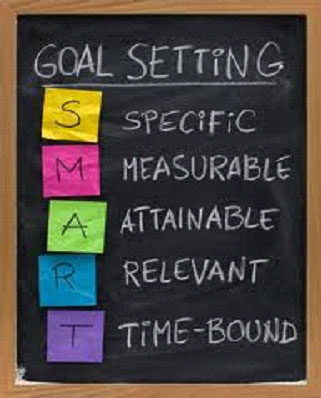
Why am I doing this? What is the relevance of goal-setting for my future career in International Development?The answer to this is: everything! You have to create milestones to know if you are stepping into the right path. Goal-setting exercises can be a diagnostic for you’re the areas in your life that are in need of some extra work, but it also helps you keep track of your progress. Take some time to plan what you want from your life and with that the ways on how to get there become a little bit clearer.

Let’s start!

Exercise one: You only got 6 months left to live

I know this one doesn’t sound like much fun, but bear with me. If you think about it, knowing that you’ve only got 6 months left on this earth could actually be fun. You have nothing left to lose now. You are not afraid to try new things anymore or fearful of failing at something new. You are not afraid to tell people how you feel. You have the courage to take risks and live the life that you have always wanted to. So what are you doing to do for the next 6 months?

Decide quickly, because you don’t have much time left. What do you want to learn? Where do you want to go? What do you want to do? Who do you want to meet or spend time with? Make that list quickly because time’s running out and you need to go and live the life of your dreams today!

Exercise Two: Long lost friend

You come across a good old friend today. You lose contact with this friend and haven’t seen them for three years. Both you are delighted to see each other again. They say:“ I haven’t seen you for three years! It seems like ages! How are you doing recently?“ You answer their questions:

  • I live in (town, city, and country):
  • I am making a living by (job title/job role):
  • I am earning (USD per year):
  • My hobbies and interests are:
  • I have given up/I have taken up:
  • Since I’ve last seen you a new skill that I have acquired is:
  • I do/don’t have a partner and my family life is:
  • I’ve travelled to:
  • Others:

**Exercise Three: γνῶθι σεαυτόν (“Know thyself”)**The last time that I felt success was:

The last time that I did something that I really, really didn’t want to do, but did it anyway, was:

The last time I felt truly happy was:

The last time I felt truly at peace was:

The last time I felt really proud of myself was:

The last new skill that I developed was:

The last time that I felt totally focused was:

Exercise Four – Congratulations! You won the lottery!

Close your eyes for a moment and imagine that you’ve just checked your lottery ticket and you have the winning numbers. After you get over the initial shock, you realize that your life is about to change forever. Are you still sitting down? You should be jumping up and down with excitement by now. So how will you change your life from today? You’ve got all the money you need to make things happen in your life, so write down how your life is going to start changing from today.

You don’t have to worry about bills coming, loan repayments or other payments. Picture this incredible wealth. Now, what are you going to do? How are you going to fill each day?

Conclusions:

After you have done these exercises, you will know yourself more. Now let’s take a look what they were supposed to accomplish:

The first one gives you an idea on your immediate goals and which areas of your life you have to start working on.

The second exercise, “Long lost friend” gives you the answers to where you want to achieve in three years.

Exercise three helps you to appreciate life and enables you to know when you are experiencing certain ‘feelings’. It gives you a point of reference for the future to feel that experience again.

Exercise four “You won the lottery!”. This exercise indicates how you would like to spend your time and what you really want to do. Could you do more of this in your life? Could you even do this for a living? Just think it.

If you do these exercises honestly, you will know your purpose, passions, needs and drivers. Go ahead and set your goals!

A good way to finish these exercises is writing down a “Vision of your Ideal Life”. In this you should write the state of your career and finances, what you will be doing in your free time, how is your health and fitness and how you are contributing to the larger community.

All the best,

Natasha Leite @natashaleite

How to be better at your job search?

How to be better at your job search?

For what you have been telling me in the last couple of weeks, one you the biggest issues you seem to be facing is having difficulties with the job search aspect itself.

My first advice would be: be clear of what you are looking for, your skills and what you can bring to the table to that “idealised” position. Sit down and write what type of position you are looking for, how your skills match that position and what are will willing to learn. Focus on your strengths, always. This is not magic or the secret. The way that exercise helps you is my focusing your search, helping you be more specific and to the point while writing your cover letter and being able to express your competencies in potential interviews.

I would also advise you to think beyond the internet. Try to make connections in the organizations you want to work, join specialized groups in your field, and tell everyone, their mother and brother that you are looking for an entry-level position as… [insert here fundraiser, programme assistant, assistant researcher in sustainable development, it’s your dream, just try to be realistic and specific with what you are aiming for].

Besides the traditional websites, look for job posting spaces that are tailored to your needs or skills. For instance, in my space, Doing What You Love, I make sure we only post entry-level positions, which for me means from 0 to 3 years of experience in the field. If you are in the United States, Idealist and DevEx have a wide range of job opportunities that go beyond the traditional spaces, but provide meaningful starting experiences. If you are in Europe (yes, I do count the UK as Europe… Because it is), Charity Jobs, Geneva Jobs and Eurobrussels may be good places for you to start looking. South Africa has NGO pulse and in Thailand has ThaiNGO. Most countries have their outlets, you just have to find them.

One of the most important pieces of advice I can give anyone that is looking for a job: KEEP TRACK OF YOUR APPLICATIONS. With a simple spreadsheet with position, date when you applied, TOR and response will help you to have control of your application’s status and you will not have to sweat to get all the information in case someone calls for an interview.

Those are just some of the tips that can make your job search a little bit more efficient. It will also help you to be a little more focus and target the areas you want… Not just any development job, because you are desperate. Finally, you will be able to see how you are progressing with your applications, which is tremendously helpful, especially on those moments where you feel like you are not really moving forward (to reassure that you are indeed).

That’s it for this week! Next week we are going to talk about goal-setting exercises.

See you next week and best of luck in your search!

All the best,

Natasha Leite @natashaleite

What is doing what you love, anyway?

Hey, everyone. So, once again I’m have a crazy week, but I did manage to write this, so I’m giving myself a pat in the back.I think people misunderstand the meaning of “Doing what you love!”. I say that, because even people who are doing what they love question it because they do not love their jobs 24/7. That is an impossible goal, especially when you are starting out… When your choices and freedom are a lot more limited.

“Doing what you love!” is a process. A process that takes a goal, a plan A, a plan B and dedication. Being a liberal arts major is extremely competitive in the job market. I know. International Development is an even more competitive field. I get it. But things that are worth fighting for are like this. For some, working in an aid organisation will not happen at the first try. Does that mean that they never will be able to work in development? That’s an absurd thought. Many businesses are renowned for their strong corporate responsibility areas. You can always start somewhere that will give you an edge. Look at how many Foundations are there and what are they looking for. Start building a good reputation.

I know it’s easier said than done, but I also know that discipline is the only way to achieve most things in life that are not just given to us. Do you want to manage projects for a non-profit? How about becoming a great project manager and switching to non-profit? Try government positions on environment or poverty alleviation.

We live in a global world with global opportunities! If you are from a Mercosur country you don’t have to have a work permit to work in Argentina, Ecuador, Brazil, Peru, Chile or Bolivia. If you are from Europe within the European Union, you don’t need a work permit. Of course, between regions is a different thing, but that means that you can apply for national positions in those countries.

Having relevant work experience outside development is still better than having no relevant work experience. I am not saying: “give up from development organizations”! Any time you’re tempted to think ‘Should I do this OR that?’ instead, ask yourself, “Is there a way I can do this AND that?’ It’s surprisingly frequent that it’s feasible to do both things. I’m trying to reassure you that if you don’t have the money to keep trying to break in to this field through the right internships and fellowships, you don’t need to give up your dream completely. There is always an alternative path… You just have to know where you want to reach.

These are some ways to help you make better decisions, or at least be surer of yourself:

1. Ironically, the first way is to find ways to try and prove yourself wrong, and do everything in your power to find out what the reality of your situation is. Talk to people, try things out in small, low-risk ways and play your own devil’s advocate.

2. Get some distance before deciding: Avoid getting lost in short-term emotional attachment. Use the 10/10/10 test. How will you feel about this decision in 10 minutes from now? How about 10 months? How about 10 years?

3. Prepare to be wrong: “A study showed that when doctors reckoned themselves ‘completely certain’ about a diagnosis, they were wrong 40% of the time.”

Part of our problem is that we spend much of our time of autopilot during our decision-making processes. Set up ‘tripwires’ to knock yourself out of autopilot and force yourself to reassess your situation on a regular basis. These could be deadlines, budget limits, or even giving the feeling that ‘something’s not right’ a name, so you can recognise it and follow a process to check it out.

Mostly, your decisions are not irreversible… It’s normal to be uncertain or anxious… There is no right path and you are never going to be 100% sure of your decisions, but you can be sure of who are… Or at least who you want to be. You can choose to make the most of any job as long as you know your purpose. Don’t despair if “Doing what you love” does not seem real all the time… Or it seems like a far away dream. You will always have choices.

All the best,

Natasha Leite @natashaleite /

How to perform well at interviews being an introvert?

On to hacking interviews… (No, not the Sony/North Korea thing)

So, I’ve gotten a couple questions on how to “sell yourself” in an interview if you are an introvert, which I realised would be a good subject for one of our newsletter… If you’re an introvert, interviews are always going to be a draining process for you, which sucks, but you most likely won’t be able to avoid them either. Let’s try to focus on how to make this the best process for you. That’s why you need to learn how to prepare for interviews with your introvert strengths and tendencies in mind.

Remember: anticipation is the ultimate power! For interviews and problem-solving in general. Leaders are people that are able to look to the future and anticipate issues. By understanding your weaknesses and focussing on strengths you are showing maturity and deep understanding of yourself, which are usually traits that one seeks in an employee. I can stress this enough: You don´t have to become someone that you are not, you just have to remember to highlight what you already have.

Think of the interview as a conversation. A key aspect of the hiring decision is whether you’ll fit into the organization. If you remind yourself that you’re just having a conversation, you remove some of the performance anxiety.

Remind yourself that you’re there to gather information to help you make a decision about whether you are interested in this position. You have choices. Accepting a job is YOUR choice as much as the person who is hiring you. This changes the focus so that you feel less at the mercy of someone else’s decision, and thus less fearful.

Think of your experiences in your job in terms of reporting the facts, not as bragging. You’re not expressing an opinion; you’re simply describing what happened - what challenges you faced, what actions you (or your team) took, and the outcomes of those actions.

If you are doing an in-person interview - which is becoming increasingly rare -bring a professional-looking portfolio with you with a pad of paper in it, and list a few key words or phrases as prompts to help you remember points you want to make. You can subtly glance down to the paper in your lap and get your thoughts on track.

During the interview, you don’t need to apologise for being an introvert, shy or soft-spoken. Soft-spoken people are generally considered trustworthy. Being an introvert does not mean you are not confident. The fact that you are not speaking all the time would not be considered a weakness; most people would just think you are polite. ;)

**Don’t be afraid!**This is the most important piece of advice. This is just a job interview. You will always have a chance to do it better. Being an introvert is not a handicap or make you less qualified for a particular job. Be confident in your skills.

Well, this is it for this week. Best of luck in your job search, life plans and keep in touch!

All the best,

Natasha Leite @natashaleite /

It's here! 20 Weeks to Build Your Career in International Development!

20 weeks book cover

It’s here! My new book, which I’m really excited to share with you! 2015 is starting with a bang and this is an opportunity to start the year with very structured guidelines or a “game plan” as you will of how to prepare yourself for the job hunting in this field.

This book is an amalgamation of advice I have given in my weekly newsletter, weekly articles, blog posts and more since I have started the project “Doing what you love”, that culminated in the book with the same title. It was build in a way that in 20 weeks you are able to find pertinent information on a career in international development as well as practical advice of what to do and what not to do while looking for a job.

It was a great experience and I hope that you find it really useful and helpful in your search.

Best of luck in your job hunting!

Natasha