The Challenges of Working (and Living) with Sexual and Gender-Based Violence

Article published first at Women Deliver Blog.

You could be in Brazil, the United States, the Maldives, Thailand, France, Jordan, or, in my case right now, Kenya and talk to someone about their experiences on sexual and gender-based violence (SGBV). Chances are, most girls and women will have a story – from being objectified and harassed in the street, to being raped or forced to marry as a child.

Working with gender and violence is not an objective work because there isn’t a separation; those conversations about SGBV are experiences we share as women and girls. In both my personal and work experience, the biggest difference between countries from the Global South with the reality of the Global North is not that violence necessary occurs less, but that victims and survivors have more supporting services on which they can rely.

I make the distinction between survivors and victims because some people are never really given the opportunity to overcome the violence they have suffered. They could be re-victimized by the very same actors that are supposed to be helping them and shunned by families and communities. Overall, between 34% and 59% of women who were physically assaulted by their partners reported that no one had tried to help them.

When I was working in Belize coordinating a project on prevention of violence against women and human trafficking, there were no public shelters for women who had experienced sexual or gender-based violence. This means that if someone was a victim of domestic violence, they would have to rely on their own funds or find a community-based initiative. The Belize government has one specific department within the Ministry of Human Development for gender-related issues, which is the Women’s Department. The Women’s Department has eight social workers trying to cover the entire country’s sexual and gender-based violence cases and it has very limited human and financial resources. This experience is not unique; in many places that I have worked, women and girls would be glad to have what Belize has because too many don’t even have one assigned social worker for their district.

There is the added fact that violence and patriarchy are so pervasive that people don’t realize when they are replicating it. Talking with a police commissioner about changes in the domestic violence legislation, giving it a harsher sentence to perpetrators, I received the following reply: “Yes, it is challenging. For us even more so now that we have to put those guys alongside dangerous criminals like murderers and robbers.” I couldn’t believe my ears – a crime against property was considered “more dangerous” than a crime against another human being.

But the reality is, they can change, but not until we make that change mandatory Impunity is a major driving force for why sexual and gender-based violence is a worldwide epidemic. 119 countries already have laws on domestic violence; 125 have laws on sexual harassment; 52 have laws on marital rape. This proves that as a society we know, at least conceptually, that SGBV is wrong. We now need law enforcement and justice to give due attention to those cases. We need institutions to address sexual violence and harassment in the workplace. We need people to stand up for each other when someone is being harassed in a public space.

Most importantly, we need countries to make psycho-social support and attention to victims a priority. Government domestic violence units are sorely underfunded, often lacking training, social workers, or even private rooms. It is not a matter of lack of resources, because combating drug trafficking or border control programs usually have funding throughout the year. It’s a matter of prioritization.

We can eradicate sexual and gender-based violence within our lifetime; we just have to dedicate enough resources and act together. It is not too much to hope. In the end, we just want to live a world where violence is not such an integral part of our lives as women.
Women Deliver, but we can deliver more for all women

Conference Graphic via Women Deliver

From May 16-19, Copenhagen held the largest conference on sexual and reproductive health rights and the advancement of the rights for women and girls in the last decade. Women Deliver gathered 5763 activists, educators, journalists, academics and others to discuss our new development framework (the Sustainable Development Goals) and some of the main issues women and girls are facing today.

Hundreds of speakers - from Hilary Clinton, Muhammad Yunus, Ban-ki Moon to the Crown Princesses of Denmark, Norway and the Netherlands - were present, discussing the development and promotion of women’s rights, participation and empowerment in the current framework. The eight Millennium Development Goals (MDGs) – which ranged from halving extreme poverty rates to halting the spread of HIV/AIDS and providing universal primary education, all by the target date of 2015 – form a blueprint agreed to by all the world’s countries and all the world’s leading development institutions. MDG 3: “Promote Gender Equality and Empower Women” was the goal that was determined to have advanced the least and in some regions, inequality has worsened. For instance, according to the MDG results report, “in Latin America and the Caribbean, the ratio of women to men in poor households increased from 108 women for every 100 men in 1997 to 117 women for every 100 men in 2012, despite declining poverty rates for the whole region”.

On 1 January 2016, the 17 Sustainable Development Goals (SDGs) of the 2030 Agenda for Sustainable Development officially came into force. Over the next fifteen years, with these new Goals that universally apply to all, countries will mobilize efforts to end all forms of poverty, fight inequalities and tackle climate change, while ensuring that no one is left behind. SDG 5 is reaching for gender-equality and SDG 10 is targeting inequalities within countries. Political and development leaders have to be serious about their commitments to ending inequality and addressing, particularly, the needs of women and girls of the most marginalized groups, such as ethnic minorities, LGBTI community members, people with disabilities, sex workers and more.

I was at the conference as a young leader and a panelist, and I was happy to see youth engagement being promoted in a very meaningful way. Youth representatives were present in each panel and they had a pre-youth conference, as well as specific events catered to youth priorities. I was also very happy to be able to see different regional perspectives on issues that are part of my work framework (gender-based violence), which I don’t see as often, such as female genital mutilation/cutting and access to abortion during conflict settings. As well as engaging in discussions on ending violence against women, as well as being a speaker on a panel of human trafficking as a systemic violence against women and girls.

It was great to hear from people and organisations from all over the world regarding their main challenges and best practices, and the ways they have found to move forward because we still have a long way to go. One of the biggest challenges of the event was the inclusion of marginalized groups, especially non-English speakers into to this broader conversation, which in my opinion, is one of the main challenges for development in general. Many people were denied visas to Denmark and many just couldn’t afford to be out of their daily jobs to be there. Global discussions are privileged spaces and we have to acknowledge and bring those issues to the table if we indeed want to keep the principle of “no one left behind”.

Kate Gilmore, Deputy High Commissioner of the UN High Commissioner of Human Rights, best summed the need for all of us to fight together for the benefit of ourselves as a society in her closing speech of the conference by saying, “my recognizing the rights that another has does not diminish those that I have. Any more than your recognition of my rights takes away from the rights you have. I don’t have to agree with you to uphold your rights and you don’t have to agree with me to respect mine. In fact, upholding rights for each of us to the exclusion of none of us is in the interests of all of us.”

Practitioner's perspective on Humanitarian issues

| Who is Bia? |

I am a young humanitarian worker with experience in Eastern and Central Africa. I am from Brazil and following my graduation in International Relations, I pursued a Masters Programme in Peace and Conflict Studies in Sweden. During my studies I did a number of internships that gave me a solid background, and since I finished my studies I have been gaining field experience in different countries.

I have specialised in conflict and post-conflict societies, forced displacement and peacekeeping, however within the field of humanitarian work I am a Protection specialist. Protection is a cross-cutting technical field of humanitarian work, where, in a simplified manner, we strive to make sure that the human rights of beneficiaries are being fully respected, that people with special needs or in situation of vulnerability get assistance in spite of their added difficulties, assess threats and risks for the population, among many other attributions. I have been working in challenging environments, especially in South Sudan and the Democratic Republic of Congo, where the security and humanitarian situation can be precarious as well as volatile. I find humanitarian fieldwork incredibly fascinating, and have many stories to share about life in remote corners of the world.

Humanitarian life

Since I have been living in conflict zones, nothing surprises me as much as the way that life goes on. From media and fictional references about the phenomenon of war, we tend to think of war as a break in space and time.

A moment when the bombing, shelling, death and confusion overwhelm normal life and stop all ordinary activities. However, in many current civil wars, asymmetric conflicts where fighting is not everywhere, parents are sending children to school, worried about their end-of-term exams, young people are searching for work and getting married, bakeries are producing daily bread, and every now and then in some places, these activities are temporarily halted by violent activities.

But most of the time the show must go on and a sense of normalcy is attained. Not only for the locals but for humanitarians as well. The system in place was created for the traditional setting where a humanitarian has a family back home (usually wife and children), sends them money and goes on R&R to see this family every now and then. However, for a significant number of humanitarians, their entire lives are out there in the field. All of their earthly possessions, as well as all of their significant relationships.

Many people think that when you are a humanitarian, suddenly your life stops and you spend all of your time feeding hungry children, carrying sacks of rice, registering refugees or building latrines in a jungle during a mission. However they forget that most humanitarian jobs are standard 9 to 5 office jobs, with only the occasional trip to a remote area. Even in some remote, chaotic areas, when the workday is over you retire to your guesthouse, tent or container and have your free time. That’s when people put on their best clothes, go to social events, watch movies, cook and life goes on.

This fragile sense of normalcy is what allows us to spend decades of our lives from conflict zone to conflict zone. Humanitarian work in the field is a chosen lifestyle made of many sacrifices but yet more rewards, but it has a number of unforeseen implications that you have to be prepared for.

Bia Albernaz is a Brazilian humanitarian worker currently based in New York, working as an Emergency Officer for UNICEF. Previously, she was working with UNHCR in the Democratic Republic of Congo.

Thank you for staying tune everyone

Never Again Again

Illustration by Erin McPhee

Content warning: this post discusses sexual violence. This platform intends to create safe spaces, so we want people to engage with the subject matter without unintentionally exposing you to anything that could be triggering or painful.

Rage, anger and indignation have flooded social media in Brazil in the aftermath of one crime that shocked us to the core. 33 men raped a 16-year old in Rio de Janeiro, Brazil, and shared their crime on social media. Indignation not only because it was a horrendous crime, but only a few days before another girl had been raped in Piaui, a North-eastern state in Brazil, by 5 men repeating an all too real pattern of violence for Brazilian women and girls.

As feminists and allies protest the heinous crime, the impunity of sexual violence in the country, and the increasingly difficulties in accessing sexual and reproductive health rights services (as I mentioned in my last piece), others try to subtly legitimise or minimise these crimes, which is why it’s called a “rape culture”. Major news outlets call the crime “alleged crime”, but definitely called the victim a social drug user, a “favela” goer and a teenage mom. These media outlets also hinted that she had cheated on her boyfriend and he did what he did as some sort of revenge. As if any of those things can be used as justification for this brutal crime. The media is doing the work for the rapists and justifying their actions, while the victim, as usual, is left to justify her “honour”.

No wonder so few people report their sexual crime cases, with high levels of impunity and even higher levels of re-victimisation, we have seen over and over again that survivors do so despite our institutions and not because of them. Survivors are left, trying to build themselves up, having their bodies and dignities violated, their morals questioned and their rights denied.

Twitter image via BBC News

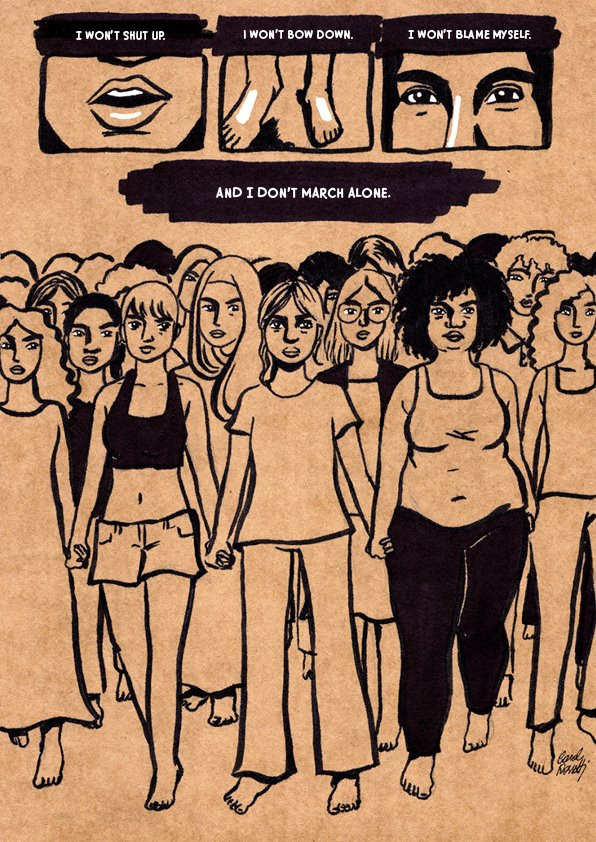
Violence is a tool to shut women down from political spaces, from speaking up, to make us conform to be some sort of submissive stereotype instead of complex human beings with emotions and opinions. Rape is never about sex; it is always about power and dominance. It’s about breaking someone and making them feel weak, so the perpetrator can feel powerful. So, there is NEVER a justification for rape and it is staggering that this still needs to be said.

Thousands of women and allies have taken to the streets to say “Never Again!”, but politicians don’t seem to care enough. One of the first official civil society meetings that the newly appointed Minister of Education (for the current transitional government) had was with an actor named Alexandre Frota, who professed to having raped a woman in a national TV show interview. His request was that politics and sex education were kept out of schools. Strange timing since the transitional government is facing a lot of corruption charges and recent recordings have shown that the President Dilma’s impeachment was a political manoeuvre to stop a widely-known corruption investigation. And, Mr. Frota himself is a well-known supporter of the impeachment process and a former porn actor.

Illustration by Carol Rosetti via Facebook : https://www.facebook.com/carolrossettidesign/ (www.carolrossetti.com.br)
There are many vectors for this current systemic violence: impunity, objectification of women in the media, not enough female political representation, and mostly because we live in a society that does not acknowledge women’s rights as human rights, but privileges or morality issues.

After being taken to the hospital with serious injuries, the young victim from Piaui didn’t survive her assault. The young girl from Rio has survived, and keeps surviving her morals being questioned by anonymous faces online and well-known faces in the media and having her rights systematically violated. Even though the crime was recorded and several men have confessed, the police commissioner still insists “there is not significant evidence to prove this crime”. With that we wonder, what will it take for our society truly say “Never again” to sexual violence.

Working in different countries… Also known as why are working permits so hard to get?

… Or who the hell makes up these systems?

Countries make migration hard to try to “protect” their own citizens from job scarcity, which after a good hour in Google Scholar I couldn’t find an article or study to demonstrate when or if that could actually happen. But that’s besides the point. The reality is that we are living in times of very anti-immigration discourses and it is becoming harder to move to a different country with a job offer from a small NGO and even harder to move to a country with no job at all.

That’s troubling because a lot of you and young people in general that want to work in international development wants to have some international experience. Also, I will say that 98% of the people that reach out to me are struggling to find a job that suit their profile… In their “allowed” geographical area. The problem is most of the entry-level jobs seem to be concentrated in the US or Europe and it is difficult to apply for those if you don’t have an existing work permit. Throwing us back to the chicken and egg cycle. You need a job to get a work permit, but you need a work permit to get a job. Oh, how fun those are… (And by fun I mean ridiculous).

The visa/work permit issue is probably the main hiring advantage from International Organisations from the UN System or Red Cross in comparison to international or local NGOs. There are treaties in systems in place that allow those visa processes to be a lot easier and you can be recognised as an international worker. However, as I have mention many times, it’s not always easy - or helpful - to start on those organisations at Headquarters level. However, if you have a country of interest target those organisations in that country. You might have better luck and even interning there will be better for your skill development and CV.

What are your other options?

If you are European, count your blessings. The only region that will be a little more challenging for you will be… South East Asia. And even then, your EU status brings serious benefits. And the rest of the world is hating you for it while being incredibly jealous (joking… Not really joking).

If you are in South America you can now extend your search to the entire South American region. Thanks to the Mercosur Agreement of 2014, nationals of those countries can move for work for two years without an employment offer. In those cases, you can actually apply for national positions. Furthermore, nationals from Latin America (sorry, Caribbean) after living in Spain for two years (for work or study) can request residence.

If you are Canadian or from a Commonwealth country you can work more easily in the UK - but you have to hurry, because that may end soon under the current administration - than other non-European nationalities. You can also look how to work and live in the UK under the International Graduates Scheme or the Ancestry scheme.

US residents and nationals can work on New Zealand, Singapore, Canada, Ireland and Australia more easily due to travel/work schemes. Not really related to my particular audience, but there are a lot of retirement schemes for US citizens. Like a lot. Basically, you can take your pick between Central America and South East Asia if you want to retire abroad with no major issues. Just a little nugget of information for the future.

Ok… Those situations don’t apply to me, what should I do?

To start, I’m not an immigration lawyer and every case is different. If you are seriously passionate about moving somewhere specific, you should check their Embassy/Consulate or an immigration lawyer specialised/recommended by that country. That being said, here are the most common options for visas:

  • Digital Nomad style: 3 months in different countries on tourist visas. That only really works if you have flexible work situations. But if you are a blogger, photographer, social media analyst… This could be an option for you.
  • High Qualified Professionals visas: these visas are incredible hard to generally in Europe, but fairly easy in Canada, Australia, New Zealand, Belize and the Pacific. So, if you are targeting those countries, maybe that will be an option to consider.
  • Marriage/Dependant visas: marriage can help in certain cases, just check if the country of your partner allows for spouses to work (as you can see I’m totally a romantic).
  • Ancestry visas: a lot of countries will facilitate working visas or give citizenship for Ancestry, so talking to your grandparents about the family tree may prove to be useful after all.
  • Investment visa: for some countries, having an investor visa is the best solution if you have a decent amount of savings. Just beware if the country that you are targeting does not have a “minimum yearly expenditure in country” type of string.
  • Work/Holiday/Volunteer scheme: many find this an easy option to get acquainted with the country they want to move to and build networks; it is just not a very sustainable visa.
  • Student visa: if that’s definitely the place you want to work in, there are student visas that allow you to work a certain period of hours and with that you can find local knowledge on how their system work and what are the best channels to work in the country.

This is all for this edition. I wanted to keep nice and short for you guys and as usual, you are more than welcome to contact me with questions and suggestions,

The “Spring” of Women’s Movements in Brazil

This was originally posted in Shameless Magazine.

Image Courtesy of Agência Brasil Fotografias

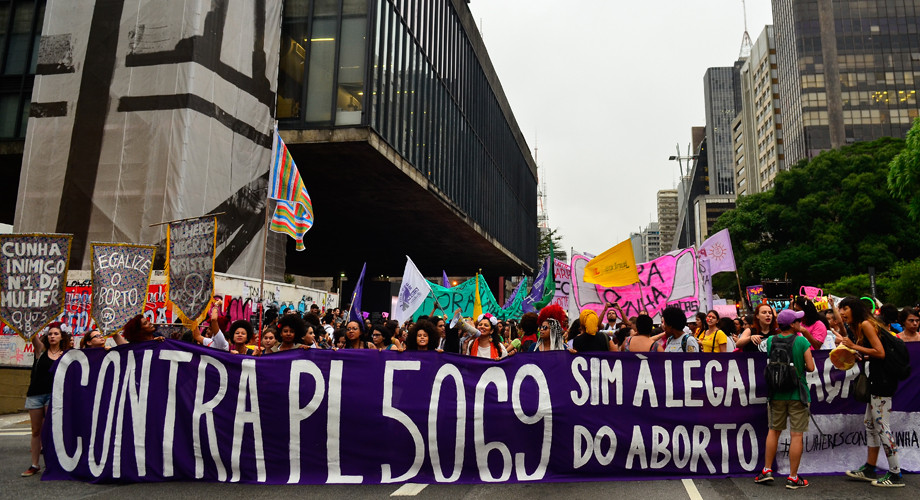
If you are following the latest political news from Brazil you may have noticed that women are taking the frontlines of the legislative battle to uphold their already limited sexual and reproductive health rights. The background of this process is not a new one. A conservative wave has taken over Congress and, unfortunately, many of the bills being proposed are intended to take away many of the current guaranteed rights, which has raised the strongest wave of women’s politicization in the last twenty years.

Many of those aforementioned bills are a great set back to human rights in Brazil, specially for minority groups. Examples of that are the reduction of the age of imputability, the dismantle of the firearms legislation (to allow people who have committed crimes and are currently being trialed to own firearms), the approval of the construction of a 400 million dollar mall for Congress members, or the attempt to “redefine” marriage because the Supreme Court has ruled in favour of marriage equality. But, the straw that broke the camel’s back for women in the country was the bill that would make it mandatory for women to have to go to the police stations, first, instead of the hospitals in cases of rape and sexual assault, putting at risk the evidence collection process that usually happens in the hospitals, but most importantly, putting at risk the health and well-being of victims of sexual violence. The only ones who benefit from this legislation are rapists… Because the clear consequence of this bill is an increase in impunity and under-reporting.

Image Courtesy of Agência Brasil Fotografias

The main argument from this conservative group from the Congress is that issues like abortion or allowing access to contraceptive hurts their Christian morals and values. However, the protesters and critics of those politicians claim the inherent hypocrisy in this discourse when most of these Congressmen are being investigated for corruption charges internally and by Interpol. The Congress’ president (an analogous position to speaker of the house), is being charged by the attorney-general and Interpol for having over 50 million dollars of “unexplained” funds in Switzerland.

With that environment, women from all over Brazil joined forces to march and protest to demand that their rights are upheld and to demand the dismissal of the President of the Congress for corruption and embezzlement charges. They are also asking for better family planning services. It has been the largest women-led protest in the country with cities seeing 15 thousand to 30 thousand women protesting. An online movement asking women to share their harassment and violence stories gathered more than 82 thousand stories, tweets and notes in one day. Internally, media has starting to call this movement the “Feminist Spring” - in relation to the Arab Spring and the protesters’ demands for nothing more than their Human rights.

Image Courtesy of Agência Brasil Fotografias

Much like the Arab Spring, it is not the first time that feminist movements and organisations in Brazil have protested for human rights, but this time it seems the support goes beyond the groups and into the mainstream. Even within religious and conservative groups there was support for the demonstrations given the outlandish nature of this bill and its potential ramifications. In the end, there is hope that human rights will keep progressing and this process has helped forge a stronger and more widely supported women’s movement in Brazil. Hopefully, that will also translate into the election of political representatives that are more aligned with the ideals of a more progressive, inclusive country that values and respects women’s rights.

Quero ser: Natasha Leite

queroser

Em mais uma entrevista da série “Quero ser” (já publicamos entrevistas com a Luciana Brito e Jarid Arraes) , trazemos mais um exemplo de mulher empoderada e de sucesso em uma carreira profissional que ajuda a mudar vida de outras mulheres. Apresento a vocês a pesquisadora em Segurança e Desenvolvimento e ativista de Direitos Humanos Natasha Leite. Ela já passou por diferentes agências das Nações Unidas e trabalha hoje na organização internacional para resolução de conflitos Danish Demining Group, com sede central na Dinamarca. A carioca formada em Relações Internacionais com mestrado em Conflito, Segurança e Desenvolvimento no Reino Unido começou a trabalhar na ONU em 2010 e desde então passou pelo Programa das Nações Unidas para o Desenvolvimento (PNUD), pela UNICEF e Fundo de População das Nações Unidas (UNFPA).

Durante tantos anos engajada com direitos humanos, Natasha fez pesquisas e deu consultoria para projetos com foco em violência contra a mulher, tráfico de pessoas e violência armada em países da África, América do Sul, América Central e Caribe. Na nossa conversa para a Ovelha, ela falou sobre a sua percepção sobre esses temas e contou um pouco sobre sua carreira.

Espero que a história de Natasha e sua motivação em falar sobre assuntos tão difíceis sirva de inspiração para as leitoras interessadas em seguir carreira em direitos humanos e desenvolvimento.

Ovelha: Você poderia falar um pouco sobre o projeto que vem desenvolvendo dentro das Nações Unidas, relacionado à segurança pública?

Natasha Leite: Hoje estou no centro regional das Nações Unidas da América Latina e Caribe pela Paz, Desarmamento e Desenvolvimento. Parte do projeto é criar um sistema judiciário mais justo, mais robusto, com profissionais mais qualificados e tentar, com isso, ter uma percepção de segurança um pouco maior e criar uma confiança no sistema de justiça por parte da população.*

Antes disso, eu estava coordenando um projeto específico de prevenção de violência contra mulheres e tráfico de pessoas. Anos anteriores, eu estive trabalhando com a América Central na estratégia de prevenção de violência armada e promoção de segurança. Então, apesar de ter feito mestrado em Conflito, Segurança e Desenvolvimento e ter uma perspectiva acadêmica, meu trabalho sempre teve muito mais uma parte prática, desde assessoria política e planejamento de estratégia a implementação e apoio ao fortalecimento institucional em países e comunidades.

Ovelha: Quais as maiores dificuldades na abordagem de segurança pública e violência?

Natasha Leite: Você não pode tratar o estado como suficiente e homogêneo, que trabalha de uma forma única. Tem várias instituições que trabalham e ajudam muito no controle do problema, e outras que estão trabalhando contra. É uma questão muito mais complexa do que falar que os estados têm que ajudar no controle da violência contra a mulher.

Quando você trabalha com isso diretamente, tem uma parte terrível e que é muito dura que é ver como os direitos das pessoas podem ser violados tão sistematicamente sem ter ajuda ou apoio. Isso te faz perder muita fé na humanidade. Mas ao mesmo tempo, você vê como nas comunidades, as pessoas são tão resilientes em lidar com situações que muitas vezes superam a imaginação. Elas te fazem voltar a ter fé na humanidade.

Ovelha: Sua dissertação de mestrado foi relacionada à violência armada em El Salvador e você segue trabalhando com a temática em países latino americanos. Você poderia traçar a relação entre violência armada e gênero?

Natasha Leite: Existem muitos elementos que favorecem muito a violência armada. A disponibilidade de armas de fogo é um dos principais. Mas o que muitas vezes é ignorado é como as armas de fogo são importantes para grupos que se sentem marginalizados. Eles ganham uma relevância instantaneamente com elas.

A gente vem de discursos em que os homens são muito valorizados pela capacidade produtiva e econômica, numa região (América Latina) onde a maioria das casas são financeiramente lideradas por mulheres.

Academicamente não se pode fazer generalizações quanto a masculinidade na América Latina, até porque ela se desenvolve não só localmente, é uma dinâmica muito mais complexa. Mas vou acabar usando generalizações pra explicar. Na região (América Latina), é muito complicado, porque a gente vem de discursos em que os homens são muito valorizados pela capacidade produtiva e econômica, numa região onde a maioria das casas são financeiramente lideradas por mulheres. Então, parte do fortalecimento dessa masculinidade é perdido pelos homens que se sentem culturalmente marginalizados quando as mulheres tomam o poder econômico. Ao mesmo tempo, pra favorecer essa situação, a gente também minimiza a capacidade desses homens, na maioria das vezes, desses meninos, de expressar sentimentos de forma construtivo. Muitas vezes o que é mais valorizado é a violência. E a violência se torna uma forma válida de ele se comunicar. Além disso, se tem uma representação midiática absurda das mulheres, que as apresenta como virgens ou como putas. Não se tem um meio termo, o de uma pessoa empoderada de sua sexualidade. Então, é complicado quando todos esses elementos se juntam, em uma região que banalizou a violência com a impunidade e o crescimento do crime organizado na década de 80.

A violência armada não afeta só o homicídio, mas também afeta temas de violência sexual e de gênero. No Reino Unido, se viu uma redução absurda de violência doméstica com a mudança para leis mais restritas para a compra de armas.

Ovelha: Em que sentido você quer dizer que a violência é uma maneira de se comunicar?

Natasha Leite: Se você tem uma arma de fogo na mão e você é de um grupo marginalizado da sociedade, você se torna automaticamente relevante pra outra pessoa que não tem uma arma de fogo. Então, a sua voz que poderia não ser ouvida é imediatamente ouvida.

Ovelha: E isso também teria, então, uma influencia na violência contra a mulher, no homem querer se reafirmar diante dessa mulher que está tomando o espaço dele?

Natasha Leite: Claro, porque existem várias maneiras de se tornar mais importante e mais poderoso. Uma dessas formas é tirar o poder de outras pessoas. Eu vou ser melhor, tornando todos piores, e isso vale também pra violência doméstica, violência contra a mulher. Se você está avançando, então eu vou encontrar uma forma de te manter atrás, de te mostrar que eu ainda sou relevante, que eu tenho uma participação.

Ovelha: Essa violência doméstica é mais frequente em classes mais baixas?

Natasha Leite: Na verdade, os estudos dizem que a violência contra a mulher tende a ser democrática em todos os setores, infelizmente. A diferença é no acesso a serviços e direitos das sobreviventes de violência doméstica e como elas são recebidas pelos diferentes tipos de serviço. Você tem, por exemplo, todo o discurso da polícia que as mulheres sofrem violência mas acabam voltando (pros parceiros). Claro, se você não tem pra onde ir, se você não tem recursos pra sair desse relacionamento, você está economicamente atrelada a pessoa, não existe outras possibilidades. O acesso de serviços relacionados à violência contra a mulher em grupos desprivilegiados é muito mais difícil.

Ovelha: Tráfico de pessoas também foi um dos seus pontos fortes de pesquisa e talvez esse ainda seja um tema ainda pouco problematizado no Brasil. Isso seria por uma falta de interesse ou pela ausência de informações mais precisas?

Natasha Leite: Acho que não é só no Brasil, acho que é uma questão global. Porque, infelizmente, tráfico de pessoas atinge grupos muito marginalizados, grupos tão marginalizados que não tem voz até mesmo em movimentos sociais. Infelizmente, até no movimento feminista existe um grau elitista.

O que não é discutido é que o tráfico de pessoas é influenciado pelo neoliberalismo. É uma situação de exploração para um fim econômico. É muitas vezes isso não entra na discussão.

Para falar de tráfico de pessoas, tem que entrar em temas, como direitos de imigrantes, direitos de trabalhadoras sexuais. Direitos de uma população que não necessariamente está na frente do poder. O tema do tráfico de pessoas entra em todas as linhas tabus, porque força cooperação entre estados e dentro dos estados em diferentes agências; força a entrada no tema de proteção de cidadãos que não são necessariamente do seu país; e entra na questão de saúde reprodutiva e acesso a direitos e serviços. Então é bastante complicado, até dentro dos nossos movimentos.

Mas outra questão por que o tráfico de pessoas não entra na agenda de discussão, talvez seja porque é o crime internacional mais rentável.

Ovelha: No documentário da diretora espanhola Mabel Lozano, “Chicas nuevas: 24 horas” que fala sobre o tráfico de mulheres da América Latina pra Espanha, mais especificamente pra Madri, ela mostra como essa atividade é organizada como qualquer outro negócio com demanda e procura. É chocante perceber essa relação…

Natasha Leite: É, o que não é discutido é que o tráfico de pessoas é influenciado pelo neoliberalismo. É uma situação de exploração para um fim econômico. É muitas vezes isso não entra na discussão. Não é só em Madri, mas na Europa em geral, o tema do trafico de pessoas é muito focado na exploração sexual comercial. E se você fala no contexto espanhol, com certeza é a exploração de latinos e latinas-americanas. Há falta de ação governamental dos dois lados. O governo da Espanha tem relações diplomáticas com todos países da América Latina! É uma falta de interesse clara.

Ovelha: Quais seriam as possíveis soluções para combater o tráfico de pessoas?

Natasha Leite: Existem várias maneiras de melhorar a situação, mas o primeiro ponto é combater corrupção. A falta de transparência das instituições e de acesso a serviços de denúncias para evitar que esse tipo de crime aconteça é absurda. Acho que os países do Mercosul estão avançando em uma linha que a Europa está se afastando: na legalização de imigrantes. O acordo do Mercosul de 2014 foi importante pra isso. Um dos grandes motivadores desse processo de legalização não foi só porque os argentinos adoram o Brasil e vice-e-versa ou porque era importante integrar Equador e Peru. Existia um problema forte que era do tráfico de bolivianos nesses países. Pra cortar o financiamento desses intermediários criminais que exploravam essas pessoas, você facilita a legalização de pessoas e você criminaliza o que deve ser criminalizado que é a exploração de pessoas. No final, essa política contra legalização dos imigrantes acaba não só violando direitos humanos, mas permitindo que o crime transnacional organizado se fortaleça. Ele se fortalece na ilegalidade.

Muitas vezes os discursos de autoridade são tão fortes que é muito mais vantajoso politicamente culpar o imigrante e o criminalizar do que, de fato, fortalecer as próprias instituições estaduais, garantir transparência, combater a corrupção. É muito mais difícil olhar pra dentro do próprio governo, do que usar um discurso de descriminalização dos imigrantes.

Ovelha: Interessante você tocar nesse ponto, porque acho que isso se aplica bastante com o caso da chegada dos refugiados na Europa…

Natasha Leite: Realmente. É absurdo porque são as pessoas em situações ainda mais vulneráveis. São famílias que não tem nenhum tipo de recurso e não falam a língua. Essa crise dos imigrantes é na verdade uma crise de solidariedade dos países europeus que não entendem que a maioria dos refugiados está sendo, de fato, acolhida por países em desenvolvimentos. Coloquei como crise de solidariedade, porque é uma questão muito mais discursiva do que uma vontade real de se organizar e apoiar a imigração. Se a questão de recursos fosse o grande problema, não se estaria dando tanto financiamento nesse momento para impedir que os refugiados cheguem até a Europa. É uma questão interna de pensar no tipo de integração. A comunidade internacional tem que tomar uma ação mais contundente e mais forte do que já vem tomando.

Ovelha: Você lançou o guia “Doing What You Love” (Fazendo o que você ama) sobre como trabalhar na área de Desenvolvimento Internacional. De onde veio a ideia de lançar esse guia para profissionais jovens?

Natasha Leite: Isso veio de uma frustração pessoal e generalizada com a falta de apoio ou de indicação que nossas universidades têm com o mercado de trabalho pra áreas não tradicionais. As pessoas de Relações Internacionais, por exemplo, não sabem como se colocar no mercado de trabalho, porque esse é um curso em que você tem que definir que tipo de profissional você quer ser. Acho que é importante pras pessoas trabalharem no que elas têm vocação de fazer, não no que parece apropriado. Depois do meu mestrado, eu decidi conversar com as pessoas, falar com a universidade pra criar uma rede de ex-alunos que possam apoiar estudantes com coisas básicas sobre a área.

Ovelha: Que primeiros conselhos você daria para alguém que está pensando em trabalhar na área de direitos humanos?

Natasha Leite: Eu acho que o importante é buscar trabalhar localmente, se você começa por uma organização menor com uma ONG, um trabalho comunitário, é bem provável que você tenha a possibilidade de desenvolver outras habilidades que vão ser muito necessárias no seu futuro. Não necessariamente você desenvolveria essas habilidades, se estivesse trabalhando pra a sede da ONU em Nova York, porque lá existe outros 500 estagiários voluntários e é menos provável que você vá se destacar. Também é muito mais difícil que alguém vá tirar tempo pra te ajudar a desenvolver e descobrir o que você precisa desenvolver e ver quais são as áreas que você gosta. Outra coisa importante é desenvolver o seu perfil a partir do trabalho que você gosta e não necessariamente imediatamente na organização que você quer trabalhar.

** Na época da entrevista, Natasha estava trabalhando no centro regional das Nações Unidas da América Latina e Caribe. Hoje trabalha com a mesma linha de pesquisa na organização *Danish Demining Group,e recentemente se mudou para Nairobi, capital do Quênia.

How to build your own project?

How to build your own project:

Why am I writing about building your own project? In my personal experience, having a project helps you keep those creative juices flowing and allows you to fulfil the needs that your 9-5 job may not reach. If you don’t have a job yet, a project is a good way to keep yourself busy with an activity that could be part of your future portfolio. What do you need to get that idea starting?

  • Fulfil a need: it’s the foundation of all the other ideas, whether you’re offering information, selling physical products or providing a service your ultimate goal should be to fill a need that wasn’t filled before or was filled poorly.

  • List what you love doing: The best and more sustainable ideas are always those built around a thing that you love to do anyway. You can get started by making a list - the longer the better - of all the things you really love to do. List everything, even if it seems pointless like playing video games or watching movies. Then try and figure out some way for each one that you could use that skill or passion to help someone out or to teach someone something useful.

  • Plan!!!: it sound obvious… But I can’t tell you how many people start blogs, community work or podcast without thinking what is my contribution to this topic? What is their goal? Who is their audience? What are the expected results? What is your standard format, schedule or content plan? It’s not an easy task to keep the wheels turning once the plan is set, so having one actually helps you prevent and overcome most of the challenges that will come along the way.

  • Also, an important step before starting your project is researching what is similar out there. Not only to get inspired and see what other people are doing, but also to find what you can do that’s unique. In the case of Doing What You Love, I saw a lot of pages and blogs that were paid job platforms, personal blogs or job-hunting sites. My idea was not along those lines. My idea is to reach those people who haven’t yet figure out what they want to do - so they can find the most suited job for them and for those who are just starting on development - especially in developing countries - what would be the best ways to go about… It may sound selfish, but I was building the page I wish I had when I was 18. My perspectives are my own - which is almost a disclaimer, but I have been in this field for a while… So, you tend to notice patterns.

  • Project’s team: Whether is a team of one or a team of many, it’s good to think how many people you want to be involved in the first stages of your project - in a realistic way. Most successful group projects are collective efforts, so if that’s your chosen format, it is imperative that the other members of the project discuss and agree on the mission, the coordinating mechanisms, communication strategy and so on.

  • Be prepared to fail epically and learn from it! In my opinion, the most important quality you will need in this field is persistence… Grit, if you will. Most of us, who want to work in development, tend to be overachievers who don’t deal well with rejection. By don’t deal well with rejection, I mean, stop on their course and try something else, because if we are not excelling, we don’t want it. It is okay to start small and not be good at first. Learn from this to be better. Keep your spirit to excel and be great (your megalomania, if you will), but always remind yourself that this is only the first step in your journey… And enjoy the ride.

Development consultancies

For many consultancies significant work experience is required. Larger ones such as Crown Agents are worth looking at even if you have minimal experience.

  • Adam Smith International - Advisory Adam Smith International is a leading international advisory firm that works throughout the world to help reform and improve economies and institutions.
  • Aurecon (IDSS) Development Consultancy Aurecon works with communities, organisations and governments to build local capacity, to advocate for access to resources and for the delivery of basic services. It is based in Australia.
  • Bankable Frontier Associates (BFA) - Development Consultancy BFA is a development consultancy guiding clients through the risks and complexities to fashion appropriate responses to advance the access to financial services for unserved and underserved people worldwide.
  • Banyan Global - Development Consulting Firm Banyan Global is a development consulting firm, founded on the principle that integrating expertise and experience from the development community and private sector will achieve a broad and lasting impact.
  • BDO - International Projects Group Consultancy services for developing nations, emerging markets and transition economies.
  • Cardno - professional infrastructure and environmental services Cardno provides services to plan, design, manage and deliver sustainable physical, social and economic infrastructure for local and international communities.
  • Coffey - Consultancy Firm Coffey International Limited is a specialist professional services consultancy with expertise in geosciences, international development, and project management. Operating for more than 50 years, they are well known in their markets for deep technical skil
  • Crown Agents International development specialist working with leaders across the world to make profound changes to systems, organisations and society
  • DAI Development Consultancy Social and economic development. Global organisation made up of four companies
  • DevTech Systems - Development Consultancy DevTech Systems, Inc. (DevTech) is an international consulting firm dedicated to development. They provide advisory services and technical assistance to government, private-sector, and civil-society stakeholders in more than 100 countries.
  • Gamos - Development Company Gamos is a small company working with the social factors surrounding development interventions, organisational development, technology use and transfer.
  • GIZ German government’s department for International Development
  • Harewelle - Development Consultancy Harewelle International Limited is an international development consultancy committed to poverty alleviation and supporting sustainable growth through capacity building.
  • HLSP - Development Consultancy HLSP provides health sector consultancy, programme management and policy advice to international agencies and national governments in developing countries.
  • HTSPE - Development Consultancy HTSPE is an international consultancy company specialising in development and programme management. Their mission is to mobilise and co-ordinate the skills, systems and services to help our clients achieve real benefits for themselves and the community.
  • Human Dynamics - Consultancy Human Dynamics is a consulting organisation, dealing with economic, institutional development, good governance and sector policy issues.
  • Indecon - Consultancy in emerging markets Indecon Consulting is an independent consultancy with its headquarters in Berlin. It has been incorporated since 1998 and is owned and managed by its directors. It provides public sector consultancy and corporate advisory services.
  • ITAD International development consultancy specialising in monitoring and evaluation in the UK.
  • Law and Development Partnerships The Law & Development Partnership provides high level strategic advice and support to developing country governments and donors. They specialise in justice and security, private sector development: governance and institutional development.
  • Malitaba - Development Consultancy Malitaba is a development consultancy in Johannesburg, South Africa that provides services to the Corporate, NGO, Community and Government sectors.
  • RTI International RTI is an independent, nonprofit institute that provides research, development, and technical services to government and commercial clients worldwide.
  • Social and Scientific Systems, Inc.Our mission is to improve public health worldwide by providing technical, research, and program management services to government and other clients. This support enables policymakers, medical professionals, communities, and citizens to improve public heal
  • SPAN Consultants SPAN Consultants is an independent consulting firm, offering specialist services in communication & information, education & human resource development.
  • The Springfield Centre - Development Consultancy The Springfield Centre is an independent consulting, training and research organisation specialising in private sector development in low and middle-income economies.
  • Triple Line - Development Consultancy Triple Line Consulting Ltd was established in 1999. The organisation works with Government administrations, bilateral and multilateral assistance agencies, international financing institutions, the private sector and civil society.
  • Verulam Group - Consultancy The VERULAM Group is an international group of consultancy companies and associate consultants specialising in governance, institutional development and process consultancy primarily within the public sector.

Think tanks with a development focus

There is a full list of think tanks (and a guide on how to get into them) elsewhere on the website in think tanks and research institutions. Here’s a few that have a development focus.

  • Carnegie Endowment for International Peace The Carnegie Endowment for International Peace is a private, nonprofit organization dedicated to advancing cooperation between nations and promoting active international engagement by the United States
  • Center for International Policy Internship opportunities The Center for International Policy is a nonprofit research and advocacy organization based in Washington, D.C. Through advocacy and policy research, CIP promotes transparency and accountability in U.S. foreign policy, while advocating a foreign policy th
  • CPSU: Home The Commonwealth Policy Studies Unit (CPSU) is the think-tank for the Commonwealth of fifty-four nations and nearly two billion citizens. We specialise on issues of Commonwealth policy including globalisation, democracy, civil society and human rights.
  • IDMC : Internal Displacement Monitoring Centre A leading international body monitoring conflict-induced internal displacement worldwide.
  • International Crisis Group The International Crisis Group is an independent, non-profit, non-governmental organisation committed to preventing and resolving deadly conflict.
  • New Philanthropy Capital (NPC) NPC is a consultancy and think tank dedicated to providing independent research, tools and advice for charities and funders, both in the UK and internationally.
  • New Philanthropy Capital | Intelligent Giving New Philanthropy Capital (NPC) is a consultancy and think tank dedicated to providing independent research, tools and advice for charities and funders, both in the UK and internationally.
  • Overseas Development Institute (ODI) ODI is Britain’s leading independent think tank on international development and humanitarian issues. ODI offers a fellowship scheme for postgraduate economists to work in the public sectors of developing countries in Africa.
  • Oxford Research Group Founded in 1982 to research nuclear policy decision-making and the prevention of war, Oxford Research Group is an independent organisation of researchers and support staff. Their aim is to assist in the building of a more secure world without nuclear weapons.

Why you might want to work in relief and development (and why you might not)

This is one of the vault posts from Humanitarian Jobs, but it is totally worth it!

Some of the good things about careers in relief and development work:

A job with meaning that aligns with your values

I count myself very lucky to be able to make a living doing work that is in alignment with my values and the things that I believe in. It seems to me that a lot of people have made peace with the idea that work is something that is separate from your values, from your passions and from your interests – something that fills the work day and pays the bills, and what you really want to do happens on the weekend and evenings. I meet many people who express a level of frustration that the jobs they are in are not providing that level of fulfillment and purpose that they want in their lives. Mission driven organizations provide one way to reconcile the two elements of seeking professional fulfillment and paying the bills. Being a humanitarian aid worker is a lifestyle (a calling, if you will) – not just a job. There is often no sharp distinction between work and the rest of your life, between your interests and passions and your job description. There is an upside to that work that you feel passionately about, and are not doing simply because you are getting paid to.

Opportunities to make a difference

On a good day, it can be the best job in the world. Really. I cannot imagine anything else being as interesting, challenging, exhilarating, and rewarding as some of the jobs I have had. Plus, every now and again, things go right, and you walk away feeling that, for some people, in some places, the world is a better place because of something you did. That’s tremendously powerful and motivating, and it’s what keeps many people doing this. This doesn’t happen every day, and the degree to which you feel a direct link between what you do and change in people’s lives depends on where you sit in the organization, but for most of us, there is a feeling that what we are doing is contributing to making the world a better place.

A community of motivated co-workers

The people I have met in this line of work are among the most wonderful friends and colleagues I can imagine. The bonds that are formed working together in intense situations are very powerful, and friendships formed over even a few days can be long lasting (although on occasion this intensity can produce equally high levels of acrimony!) I’ve known some people in the western world for years, and never got beyond small-talk, and have spent a few weeks working intensively with others who I feel I know as well as it is possible to know someone. Being a part of this community of people who share similar values and aspirations is hard to quantify, but it is definitely a positive aspect of the job.

Challenge and responsibility

You will likely have more responsibility and authority earlier in your career than you would have in the corporate world. While this can be a double edged sword, it is possible to be given responsibility for multi-million dollar programs and hundreds of staff with comparatively little experience. It can be a sink-or-swim situation, but if you swim, people will give you more and more responsibility. I remember vividly arriving in the office of a major NGO in Albania just as millions of refugees were fleeing war in Kosovo, and being put in charge of a major part of the logistics of supplying the food for hundreds of thousands of people. I tried to explain that I was new, and didn’t know how to do this, and was told that I would have to figure it out, because no one else was there on the ground to do it. I swam, just about, and you likely will too – it’s not that there is no support and training – there is certainly more than there used to be, it’s just that you need to be ready to step up to challenges and expect to be given tasks that are overwhelming. It’s part of the nature of the work – the problems we face are enormous and extremely challenging, and there is often no choice but to attempt to address a problem, even though the skills and resources available are not sufficient.

See the world, experience different cultures

Living and working in cultures other than your own can be fascinating and very rewarding. It is quite different from tourism, and lets you get to know a society and understand more about it than other types of travel. There are very few other careers that give you such an opportunity to experience a range of different countries than relief and development work. You will also see things that no one else will see (not all of them will be good, mind you, but they will be fascinating, challenging, and sometimes exciting!) You’ll be there along side the best and most inspiring examples of people working to overcome apparently impossible odds. You’ll find yourself constantly inspired by the determination, ingenuity and resourcefulness of the people with whom you are working.

Things that cut both ways:

Pay

While there is a huge range of salaries and benefits, ranging from agencies that only really ‘employ’ volunteers to organizations that pay extremely well, the pay even at the top end with the United Nations and some contractors is generally less than the equivalent in the corporate world. Furthermore, for most people working in the non-profit world, it is decidedly mediocre compared to careers in the private sector. It’s very hard to generalize, but most of the larger international NGOS have pay-scales that allow their employees to live comfortably, and, if you are working overseas the equation changes again.

  • Many ex-pats are able to pay less income tax (or even avoid it entirely) in their home country while they are living overseas (you should consult a tax advisor on the specifics of this as tax law changes frequently and is different in each country). This can make a huge difference to your take-home pay, and you should get professional tax advice to make sure you take full advantage of it.
  • While it is possible to live extremely expensive lifestyles in capital cities like Jakarta and Nairobi, many postings are in relatively affordable locations where the currency you are earning in will go a long way. In more remote postings there may simply be nothing to spend money on!
  • Many international organizations have generous packages of housing, insurance, education for dependent children etc, reducing expenditures further.
  • There are sometimes ways to have some student debt deferred or forgiven if you work for a non-profit. You need to look into the specifics of your loans and your university to see what programs are available.

While you probably won’t make the kind of money you could in the private sector, it is perfectly possible to do very well and not be on the breadline if you are working for a relatively large agency, and possible to make a very good living with the UN or contracting.

Some of the less good things:

Conditions

Pec, Kosovo, 1999

Pec, Kosovo, 1999

I’ve been posted in some truly fantastic places, but the reality is that much relief and development work takes place in some of the more challenging locations in the world. In emergencies you may occasionally be called on to live in a tent or share a small room with co-workers, more frequently in insecure environments you may live in the same house or compound as colleagues. You may not have reliable access to the normal amenities of the western world like electricity, hot and cold running water, reliable heat and cooling, and the freedom of movement to explore at your leisure. While aid agencies very rapidly find solutions for providing many of these things to their staff (through generators, water purification systems etc) the conditions in some postings can be distinctly primitive.

Conditions are not always harsh

Conditions are not always harsh

How big a deal this is to you will determine how long you want to spend in some of the more remote and inaccessible locations. I don’t want to suggest that it was the main reason I left the Balkans, but the idea of facing yet another winter of snow in Kosovo with no reliable heat and power was something that certainly factored into my decision to look for work in South East Asia! Think seriously about how you feel about access to reliable medical care, social life with people from your culture, speciality food and drink, and other creature comforts, and pick your postings accordingly. Bear in mind that, when you are starting out, you have far less choice. A very informal system of seniority tends to reward those who have ‘paid their dues’, and more senior positions are usually based in regional headquarters offices in more connected capital cities with better amenities.

Workload

The flip side of a values and passion-driven business that is focussed on changing the world is that the employees are often expected to work hard and make personal sacrifices. Long hours and unpaid overtime are often the norm, and many jobs in the field are ‘meat-grinders’ – they are emotionally and physically exhausting and people tend to ‘burn-out’ in a few years. This is not to say that organizations themselves are always unreasonably demanding of their staff, but that they often have cultures and work-ethics that are very demanding. This is particularly true in emergency postings, where the first few months can be especially hectic and sleep-deprived. Some organizations try to mitigate this by providing additional vacation time or rest and recuperation (R&R) for their teams in particularly stressful locations. You need to make sure that you take personal responsibility for managing your workload and stress levels.

It’s not always a feel-good business

Some people want to work in this line of business because they want to help people and feel good about what they are doing. There’s nothing wrong with that, but it’s worth bearing in mind that it’s not always a feel-good job. In places with high levels of need and suffering where resources are insufficient, neither you nor the beneficiaries of your work will likely feel particularly uplifted by the amount you are able to do. You may spend a lot of your time refusing requests because of inadequate resourcing, deal with donors who are unsympathetic, officials who are uncooperative, or combatants who are unwilling to help. Don’t expect to get a high level of recognition or praise for your efforts, or to feel that you are able to solve all of the problems you will encounter.

Relationships and roots

While it creates intense bonds between colleagues, the business can place enormous strains on marriages and relationships. The pace of work, the upheaval of constant and unpredictable travel, separation from loved ones, and other stressors can make stable relationships difficult. Go into it with open eyes, and talk early and often about what is going on. As Jan Davis and Robert Lambert succinctly point out “emergency relief work is frequently carried out in situations where there has been massive breakdown in civil society and where great evil has been perpetrated. Against this background, the immediate benefits to be gained from a comforting, supportive sexual relationship may seem to outweigh the long-term costs of dealing with the consequences of such a relationship when returning to normality. How you deal with these issues is a personal matter, but it is important to be prepared” 1. Think seriously about the strains that this kind of work will place on your family relationships and friendships – not only will you be away for long periods of time, but your experiences will change you, and may make it more difficult for you to fit back into old relationships. It’s not impossible by any means, but go into it with your (and your partner’s) eyes open. 1 Engineering in Emergencies – Davis and Lambert.